
Sunday, October 7, 2018

Saturday, October 6, 2018

Friday, October 5, 2018
National Geographic and Math

National Geographic has some wonderful things that can be used in Math classes. I did a general search for materials that are science based but can be used in math and the search provided me with 59 different possibilities.
The majority of items that came up are actually articles which discuss topics that use math such as engineering. In addition, there are some historical articles, and reports on people.
I clicked on an article about Foreign Finances written by someone from Visa Credit Card Company. In the article, the author who discusses things students should think about if they go overseas for a semester or year of schooling. He reminds students they have to arrange to have bills paid while gone or it could effect their credit scores. He also recommends mail be forwarded to parents rather than having an acquaintance pick it up.
Furthermore, he discusses what documents should be photocopied, which things should be left home and even takes time to discuss credit cards themselves in terms of foreign exchange rates and use fees. He tells people to remind the credit card companies you are going overseas so they do not refuse certain charges.
I discovered this happened when I ordered a rail pass that I never got. I found I need to talk to the company before ordering the rail pass so they would have accepted the charge. He spends the rest of the article continuing his discussion on everything connected with traveling overseas. The article even comes with a vocabulary list so students can check vocabulary if they do not understand it. In addition, there is a link to Khan Academy for math related to the topic.
Some of the articles are very short such as telling you when Sesame Street began or the Electoral college. Some come with questions but the questions may be more Social Studies focused however, its not that hard to create mathematically based questions so students can analyze information.
The main plus I see on the articles is that students practice reading real world writings to synthesize or pull out information in order to answer questions. This requires they practice their "reading for information" skills which shows them cross curricular applications.
Many of the articles expose students to job possibilities by spotlighting a person and discussing their jobs in details. I read one on a woman who helps provide natural disaster preparedness plans for various cities such as one for a place in Indonesia. She uses GIS to create a plan in case of tsunami.
I admit, some are not directly focused on math but the job does require it as part of doing the job. The article on this woman could be used to introduce students to GIS, how it works, and perhaps even arrange a few exercises using it so they can see the role math plays in the overall picture. I see this site as a way of showing the role math plays in the real world.
Check the site out, let me know what you think. I would love to hear. Have a great day.
Thursday, October 4, 2018
Increasing Mathematical Discussion
 According to both math standards and research, mathematical discussion is important to students learning mathematics because if they can clearly explain their thinking, it means they understand the concept.
Unfortunately, many of us do not include as much discussion as we'd like because of all the things we are mandated to accomplish in a 45 to 55 minute period.
When we listen in on various discussions, we are able to assess student understanding of the material. Furthermore, we can tell how well they listen to others while being able to express their ideas, something they will need in the future. In addition, it gives students a chance to develop the ability to construct arguments designed to defend their point of view.
It is important to create safe atmosphere in class so students feel as if they are creating a community. It is a place where students are recognized for their questions while being encouraged to comment on ideas. One part of this is for students to become active listeners so they are able to follow someone's argument and be able to counter it, should it become necessary.
Furthermore, it is important to encourage student interaction because it is the interaction which helps develop discussion. This discussion should happen equally well in pairs, small groups, and whole class. Unfortunately, one cannot jump directly to whole class discussions without allowing students the chance to become comfortable discussing math topics in pairs and small groups.
One way to encourage pairs discussion is to provide conversation starters such as:
#1 What answer did you get for problem______?
#2 I got____________. Did you get the same answer?
#1 Yes. How did you do it?
#2 Explains how he or she got it.
Continue with #2 taking the lead.
Another way is to set up prompts which hold students accountable for listening to what is being said. For instance, a student might restate the point another student made when speaking. A way to keep things interesting is to use Popsicle sticks with names or dice to select the next student. It might also be necessary to ask the student speaking to repeat what they just said if they are too quiet. In order to comment on someone's ideas, they have to hear them.
Finally, once students have learned to be active listeners and are able to restate the points, they can then agree or disagree with what was said by providing support for their stand. Although it can be a slow process, it is worth the time investment to help students become comfortable in expressing their ideas.
Let me know what you think, I'd love to hear. Have a great day.
Wednesday, October 3, 2018
A Vocabulary Game For The Math Classroom
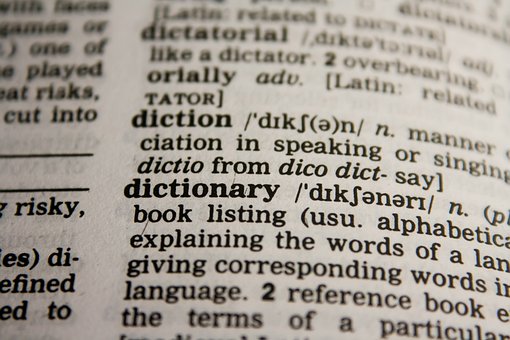 We all know that learning vocabulary in math for many students is like learning a foreign language due to the three levels of words. They are either words that have a general meaning such as "hello" or "What's up?" or they might have both a specific and general meaning such as product or the math only meaning like Torus.
We all have that one section in the book where students have to change algebraic expressions to words and vice versa. Most of the time we rely on those worksheets or some similar activity but what if we could incorporate games.
I got this game from the Sadlier school blog but I had to modify them since they were made for English classes.
1. Vocabulary Yatzee - requires students to be divided up in to groups of three to five students. Give each group five dice to roll. Each player has three chances to get the best dice they can. Students have a list of math words they will use during this game.
Two of a kind are worth the total sum of the top three dice. If they roll two dice, they must use two of the vocabulary words in a sentence. Example might be something like addition and subtraction are related to each other.
Three of a kind are worth the sum of the top four dice. If they roll three dice, they need to use three vocabulary words in a sentence.
Four of a kind are worth 25 points and requires students to use four vocabulary words in a sentence.
Full house is worth 30 points. The student must compare a vocabulary word to another vocabulary words while contrasting it with a different word. An example might be plus means the same as add but minus means the opposite.
Small straight is worth 35 points. The student must compare a vocabulary word with two others and contrasts it with a different vocabulary word.
Large straight is worth 40 points. The student must compare a vocabulary word with two others and contract it with two different vocabulary words.
Yahtzee or 5 of a kind is worth 50 points. A student is required to use five words in a sentence which must make sense and have the proper context.
Students have one minute after rolling the dice to come up with the sentence or the comparisons. If they cannot, they must forfeit their turn and it moves to the next player. This gives students, especially ELL students, a chance to become more proficient with the language of mathematics in a safe environment. This is a good step to use before having students begin discussions. Tomorrow, I have something on increasing mathematical discussion in class.
Let me know what you think, I'd love to hear. Have a great day.
Tuesday, October 2, 2018
12 Interesting Math Facts
 I love math and I love the way it makes way more sense than the English Language. I also love certain facts I've learned about math that I want to share with you.
1. The Hairy Ball Theorem which boils down to "You can't comb all the hairs on a tennis ball without getting a cowlick."
2. If you divide any number by 7 that does not have the result in integer form, you will see the numbers 142857 repeat in some way in the answer.
3. International paper sized A4 has a ratio of 1:square root 2. If you cut the paper in half, the ratio remains constant and doesn't change.
4. There are 52 cards in a deck and 52! ways to shuffle the same deck giving you 80658175170943878571660636856403766975289505440883277824000000000000 different ways. Such a large number and hard to conceptualize.
5. If you count in binary, you can count to 31 using one hand while if you use two hands you can count to 1023.
6. 73 is an interesting number because its the 21st prime number while its reverse 37 is the 12th prime number. In addition, 21 = 7 * 3 and 73 when written in binary forms a palindrome of 1001001.
7. Although there are 3 dimensional objects such as Gabrielle's horn with an infinite surface area, they have limited volume.
8. There is a paradox which states you can cut a sphere up and reassemble it into two identical spheres which are exactly the same as the first.
9. If you randomly select 23 people and put them in the room, there is about a 50% chance 2 people in the room will have the same birthday.
10. If it were possible to fold a piece of paper 103 times, its thickness would be larger than the universe we can see.
11. The universe is not big enough to contain the written digits in a googolplex, even if each digit is the size of an atom.
12. Since the ancient Babylonians did their math in base 60, they gave us 60 seconds in a minute, 360 degrees in a circle, etc.
I hope you found these facts as interesting as I did. Let me know what you think, I'd love to hear. Have a great day.
Monday, October 1, 2018
Addition and Subtraction of Integers
 This past Friday, I introduced the addition and subtraction of integers. I tried teaching it a different way than I usually do. Ordinarily, I would use number lines to show how it works, talk about adding if you have two negatives or two positives and subtract if the signs are different.
In fact, one of the kids contributed that to the discussion but they are in this particular math class because they struggle with the basic concepts. From previous experience, I know they have issues translating the visual when done with number lines to applying it to numbers.
One issue is the idea that on a number line, the positive and negative represent directions when they are used to thinking of those signs as indicating addition or subtraction. This time, I tried introducing it a different way.
I told them that addition of integers is actually combining numbers with the same signs. I didn't talk about adding, I used combining. Then we talked about a can of soda where one student drank two ounces then drank another three ounces. The students were able to see the situation could be represented by the equation -2 + -3 = -5 because each time they drank something it was removing the liquid from the soda can.
Another situation we discussed was giving money to friends. First one student gave two dollars to a friend and three dollars to another friend so he gave away $5.00 total. They said it was minus $5.00 because he no longer had the $5.00.
When I introduced subtractions, I explained with the number line that it was finding the difference between two numbers for instance 5 - 7 = -2. The example I used was the high temperature of the day was 5 degrees but that night it dropped seven degrees so the temperature was -2 degrees. The second example used was you had $5.00 in your account and used your debit card to buy $7.00 worth of stuff at the store but you'd overspent by $2.00 or you were -$2.00 in the hole.
Of course when we hit the minus a negative number, I reverted to explaining 3 - (-4) is actually 3 + -1*-4 or 3 + 4 = 7. Its hard to explain in any other terms because my students are ELL and I do not believe the science they get allows me to explain any scientific situations on this type of topic.
What I loved most was the mathematical discussion it evoked. Most of the time, I get total silence when trying to involve them in a discussion but this one, they volunteered ideas on situations that matched the problems. I would say this is one of the best lessons I had.
Let me know what you think, I'd love to hear. Have a great day.
Subscribe to:
Posts (Atom)