
Saturday, March 9, 2019

Friday, March 8, 2019
Google Celebrates Olga Ladyzhenskaya
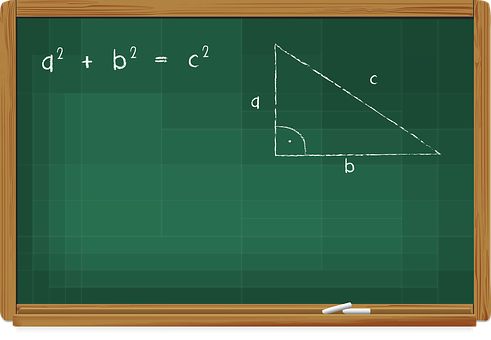 Yesterday, Google celebrated Olga Ladyzhenskaya, a Russian Mathematician. She was born in the 20th century and died in the 21st but she had an impact on the subject.
Olga was born on March 7, 1922, in a small village in western Russia. She developed a love of math due to her father who shared his love with her. He taught mathematics.
Unfortunately he passed in 1937 when the Soviet government declared him an enemy of the state, arrested, and killed him. In 1939, when she graduated from our equivalent of high school with honors, she applied to Leningrad University.
Due to her father, they denied her so she applied to Pokrovski Teacher's Training College before taking over her father's job teaching math. Supposedly, she talked her way into the teachers college before her application papers could be transferred from Leningrad University. From the information, I've found, she appears to have been admitted into Moscow State University in 1943. Although she married another mathematician in the 1940's the marriage did not last long because he wanted children and she preferred devoting herself to her work so they parted ways.
Once World War II ended, she was able to transfer to Leningrad University obtaining a Master's degree before earning her first PhD. At this point, she transferred back to Moscow State University where she earned her second PhD in 1953. Upon earning her second PhD, she got a job at the Laboratory of Mathematical Physics at Steklov Mathematical Institute in Moscow in 1954.
Eventually, she lead the laboratory and while there, she wrote over 250 papers. Her mathematical works influenced weather forecasting by refining equations used to describe cloud motion and weather patterns, aerodynamics, and equations used to describe the motion of blood in cardiovascular science. She is best known for her work on the Navier - Stokes equations which mathematically describe the motion of viscous substances.
In 1956, the Soviet government officially exonerated her father due to a lack of concrete evidence of the crime. Unfortunately, this made it so she could not easily travel outside of the Soviet Union. She only every made two trips out. The first in 1958 to attend the International Congress of Mathematics and again in 1988. Once Communism fell, she began traveling more.
During her lifetime, she wrote multiple books, and was always a leader in partial differential equations and mathematical physics. Its amazing that her work is still influencing areas today. One really interesting thing is that she suffered from an eye problem that required her to use special pencils.
Due to her work on that and differential equations, she received the Lomonosov Gold Medal in 2002 after she'd been denied the Fields Medal in 1958. The first women to win the Fields Medal, did so in 2014. Olga died two years later at the age of 81, on January 14, 2004 just before she was scheduled to depart for Florida where she planned to finish a paper. At the time of her death, she had five years of research she wanted to work on.
Let me know what yo think, I'd love other. Have a great day.
Thursday, March 7, 2019
Trying Something New.
 My 9th grade math class is extremely low and very unmotivated. The only time they really get excited is when we play Kahoot, Jeopardy, or work on a games based website. Unfortunately, I have to give tests to monitor their progress in addition to using the results of games based websites.
This group shuts down and gives up easily. They lack a lot of motivation and do not do well with regular tests so I've written a partner test.
I divided the class into groups of two students. One student gets version A while the second student gets version B. Each version has different problems but both problems have the same answer. One student might have 24 x 36 while the other 54 x 16 yet the answers should match.
If the answers do not match, they know instantly something is wrong. I chose to do it this way so they get immediate feedback and they can check their work as they progress through the test. Furthermore, it slows them down to really stop and check their work each step of the way.
In addition to giving immediate feedback, it means they have to communicate to explain what they did and why they chose to solve it a certain way. This method also requires them to look for mistakes and helps them build perseverance in a safer situation.
I've known teachers who think of this type of test as cheating because students are not doing this on their own. I'm more concerned with students learning the material than them "proving" they know the material. I'd rather give a test like this to students who have little motivation. I'm hoping they get more confident and are willing to work more independently.
What's fascinating is the lack of research or information in general on this topic. I look up partner tests and get all sorts of on-line places you and your "partner" can go to see if you are a good match. Even when I added "math" to the mix, I still couldn't find anything dealing with partner tests. I even went so far as to type in "Giving math tests to two people, each test has different problems but they have the same answer" and ended up with all sorts of references to taking the Praxis or how they were scored.
This is apparently an area that has not had much written on it. I wonder if people do not think its worth it or if its been disproven. A partner test does provide some wonderful information via both the finished product and by observing students working on the test together.
I'd love to hear from others. What do you think of this idea? Let me know. Have a great day.
Wednesday, March 6, 2019
7 Ways to Increase Mathematical Reasoning.
 It's March, and we've started going over practice questions for the states required standardized test. I give one problem a day, and ask students to explain their answer. Unfortunately, they are still at the "I guessed." or "It popped into my head." or "I'm Shaman.". I've tried to explain none of those really tell me anything because there was no real thought behind it. No real reasoning.
This is the first way for students to improve their mathematical reasoning. When they explain or justify their answer, they are able to examine the logic used during their thinking. It is important to have students show their thinking process from start to finish be it verbally during exercises or in written form for daily work or even tests. Every time they show their work, they are communicating their thinking.
2. Use geometric proofs or some sort of two column proof. In the first column, they write down what they are given, then what they suspect while in the second column, they explain why each statement is true. Doing geometric proofs in this format force them to look at the small steps in solving it. This is another way to help students see their reasoning.
3. Have students work together because it allows them to justify their thinking to each other. In the process they can analyze and critic each other's thinking. Set up "Brain Talk" where students use modeling, verbalization, or other ways to show their understanding and justify their position. The teacher may need to ask questions such as "What is the same?" "What is different?" What do you know?" to help them get their thinking going. The important thing with this discussion is students have to feel safe and they need a chance to come up with hypothesis and solutions.
4. It is also necessary to come up with agreed upon mathematical terms across the grades because it leads to less confusion. This makes it easier to for students to continue developing their reasoning. When I was in school, they used the term "Borrowing" when you needed to "Regroup" as they say in today's math language. It is also important to encourage students to use mathematical language when they explain their thoughts because the more precise they can be, the better they understand the concept.
5. Take time to have students look at problems done incorrectly and identify the mistake. This process adds to developing student reasoning because it teaches them to really look at the process and numbers used to solve the problem.
6. Encourage students to find two or more ways to represent any problem since its important to "see" things in a different aspect. This helps students move to a different process if the first choice does not work.
7. Encourage students who struggle. Let them know that struggle is a normal part of learning math and developing their reasoning. The struggle is when they develop their reasoning and as they work on solving problems, their reasoning improves and it becomes so much easier.
You don't have to implement all of these at once but use one or two to start with on a regular basis till students are more comfortable with showing their understanding. Let me know what you think, I'd love to hear. Have a great day.
Tuesday, March 5, 2019
What is Mathematical Literacy
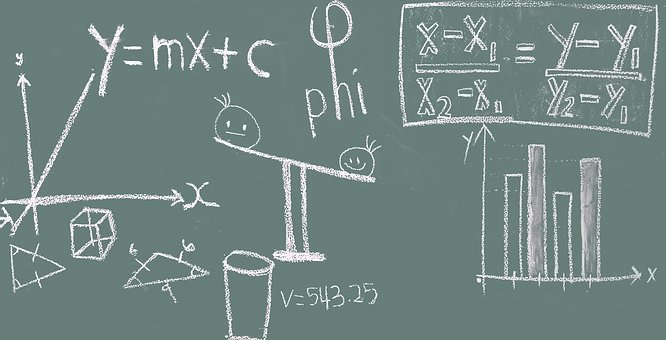 Have you every stopped to look up mathematical literacy? Have you determined what elements you need to cover for your students to be mathematically literate? Well, go no further because this answers those questions.
For a student to be mathematically literate they need:
1. To be fluent in basic facts and computation. It is important for students to be fluent in their basic facts because higher level math is built upon those basic facts. In addition, fluency indicates that they've stored the information in their long term memories where it is easily accessed. This means, they have freed up space in their working memory for higher level mathematics and to increase their problem solving abilities.
When a student is not fluent with the basic facts, they often get confused when working through more complex problems and are often lost. This may be why my students who have to use their fingers to add or multiply often are not sure what their next step is. These students struggle working their way through the process and often give up.
Furthermore, when they are not fluent in their basic facts, they focus on the calculations and often are unable to finish the longer assignments. This can extend to other topics such as science or geography because they are focused on completing the math rather than seeing the whole topic. One last thing, a students fluency in the basic facts can determine how well they do later in life.
2. To learn math concepts beyond arithmetic. It is this that helps students learn number sense so they know if an answer they found is reasonable or off base. When a student has number sense, they are able to think more flexibly and they become more confident. When they lack number sense, they also lack the basic foundation needed for simple arithmetic.
3. To connect math to other subjects. Its important for students to see that math is used in other subjects such as science, geography, architecture, business, and other things. It becomes so much more relevant when they see math outside of class.
4. To reason mathematically. This means that students can follow arguments developed by others and create their own to prove or justify their answers. A student who can reason mathematically can also look at questions and propositions in different ways, create and test hypothesis, figure out counter examples, draw conclusions, and figure out different ways to approach problems when stuck. In other words, it helps us make sense of the world.
One way to help develop this is to begin with an open ended problem or an exploratory exercise so students have experienced the concept before presenting the theoretical segment.
5. To communicate using graphs, models, symbols, and language. This is a way for students to exchange ideas and knowledge using both spoken and nonverbal methods. It is important to help students develop this ability with modeling and practice. Its a bit different communicating mathematical ideas than it is ideas from literature.
In addition, when students are able to communicate using graphs, models, symbols, and language, it improves their understanding of mathematical concepts by melding their ideas with others. It expands and refines their understanding.
6. To solve problems confidently. When a student is able to solve problems confidently, they are more sure of themselves and open to learning more. They are not restricted by their lack of ability but able to move forward to and be willing to try problems that may be a bit more difficult.
So know you know the six parts of mathematical literacy. Let me know what you think, I'd love to hear. Have a great day.
Monday, March 4, 2019
Cost Higher Than Normal
 I'm going to spend time discussion the cost involved for everyone of loosing cell phone, landlines, and internet signals to everyone involved because it is math. Last year, we had issues with service for two months and they refunded my internet costs for two months.
I haven't spoken to them yet but things finally came up again Sunday Evening. So here is some of the things that cost the village and the company.
1. With no communications, the planes could not come out. They lost money due to not being able to travel to the village. They couldn't bring the cargo or mail and would be getting even more backed up.
2. No communications also meant that the phone company owes us for the time the landlines, cell phones, and internet service was down. I'd say it was 4 days for cell phones and internet service and 2 days for landlines.
3. There is also the cost for sending one employee by snow machine over to SB which had not lost service. That includes gas, and his time.
4. The company also had to pay to send a couple of technicians and a part out to SB to go fix the relay tower that had gone down. Since it took a couple days, it meant they had to also pay for places for them to stay, etc.
5. They had to arrange for the internet signal to come up at the school. It wasn't as easy as turning a switch to shift the source directly to the satellite because last year, they used a piece they didn't have this year.
6. The clinic had to use their satellite phone to contact Bethel Hospital in case of emergencies but no one could call the clinic for appointments since nothing worked. If it was an emergency, they might drive to the clinic and hope they were open, otherwise, no one went. This means some people might have gotten sicker and it would cost more to heal them.
7. Also due to the break down of communications, no one knows if their paychecks actually got deposited into accounts. It is possible for people with automatic payments, they might not have the money and could end up paying late or bounce fees.
This all adds up to be quite a bit of money. I don't have the actual amounts but I thought I'd address it this way since it gives people something to think about. Most people do not experience this much of a communication break down.
Let me know what you think, I'd love to hear. Have a great day.
Saturday, March 2, 2019
Off the Grid
Everything, the cell phones, land lines, and internet went out on Wednesday night. The land lines and limited internet came on last night but they are shaky at best. No cell phones for the immediate future. I had to pop over to work to get this because its the only building in town with internet. I hope to be back to normal soon. I will update everyone Monday.
Subscribe to:
Posts (Atom)