Tuesday, January 31, 2017

Art and Math

Steelwool, Dark, Firespin, Spiral, Art  I want to thank O'Reilly for today's entry.  They featured an article which was fantastic where the author admitted to wondering why a person needed to learn mathematics when they have so many more fun things to do.

It wasn't until she started college when she discovered you needed math to create beautiful interactive art she stumbled upon in college.

Through out the article she shows how learning trig opened a whole new world of creation using circles and moving objects.  Even learning about simple triangles sparked multiple layered creations filled with beauty.  The author shows us how triangles can be combined for art.

The most beautiful statement for me as a math teacher was the one in which she connects triangles to polygons.  Made my heart explode in joy.  I admit she describes all of the math learning in association with certain specific graphic programs but she needed the math to create each and every piece of art.

I love the way she connects her art work with various aspects of geometry and trig.  In addition, she ends the article by sharing that math is also used in the development of apps.  I plan to share this article with my students tomorrow at the beginning of each period.

So many of my students are artists who would rather draw than do math so this is perhaps a way of igniting their enthusiasm to continue in art while finding an enjoyable way for them to want to learn math. 

Check out Jinju Jang's article. Share it with your friends and with your students when they ask "When am I ever going to use this?"  I'd love to hear your thoughts.

Monday, January 30, 2017

Linear Interpolation

Graphic, Progress, Chart, Representation
I am teaching a new math class this semester called the Mathematics of Animation.  It is based off of and uses much of the material from Pixar in a Box at Khan Academy.  Normally I would use most of the material but our bandwidth sucks and I cannot get all the students online to do everything online.  To make it count as a math credit, I choose one or two topics per unit and go into more detail.

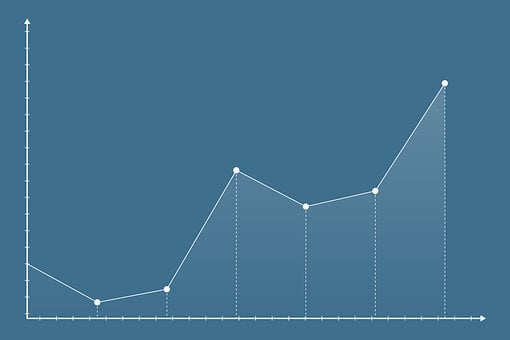
So in this case, the topic is linear interpolation which is a way to fill in values you might not have otherwise.  It involves finding the slope and using that to help find your next number.  I would use it to find the value between the 2nd and 3rd dots.  Assuming the x value of the 2nd dot is 9.5 and the 3rd dot is 13.90, I can use it to find the value for x = 11.

 So far, the linear interpolation is being used in the context of the frame and time associated with the animation of a ball.   I began by teaching it in a general sense of the steps needed in the process.  I used the chart which connected the viscosity of water to its temperature.  I wanted to give it to them in several different contexts so they might see how it applied to different situations.

The second context was population growth between two different years.  Same process but a different context.  I was able to show the slope as the population increase each year.  This context worked out much better because they could relate to population growth much better than the viscosity of water. 

For the third context, I took them back to their original context.  The final context was the easiest as it is what they saw when creating animation but they still struggled with the process.  Since I'm a bit frustrated, I looked on the web for ideas on ways to teach this topic but I didn't find anything other than what I was doing. 

I found lots of worksheets, a few videos, and other materials but no articles on ways to teach it effectively.  I did find a super mathematical article on it but nothing I could use with my students.

So I am wondering is there a better way to teach this topic or is it have them find the slope between the two points, find the distance between the original x value and the new x value to find the amount of increase before adding it to the original y value. 

Does anyone have any suggestions?  I'd love to hear from anyone on this topic.  Thank you.

Friday, January 27, 2017

I Hate This

Alligator, Animal, Crocodile, Reptile I would like to know why elementary teachers insist on teaching students the inequality signs using that stupid alligator eating the fish analogy.  It drives me crazy.  I was working with a college student on piecewise functions and she had to stop, hold up her hand and make eating motions.

Honestly, I never learned it that way and when a student explained it to me, it made no sense what so ever. 

It works if the inequality is written in a standard way such as x<4 but it doesn't work quite as well if you write it as 4 > x. 

I honestly don't know the best way to teach this concept or the best way to present it to high school students.  What I can say is I work on having students connect directly to the signs without using the alligator.

I try to teach inequalities in one variable by relating it to a number line so they have a visual.  For instance x < 4 tells me I am looking for a value smaller than 4.  If you look at the sign, it is like the head of an arrow and points towards the numbers which meet the criteria.  If its 4 > x, I teach students that this states that 4 is going to be larger than any value for x and the sign is telling you that 4 is always bigger than the value you choose.

I think this is more important than using alligators because it helps students relate to the directions rather than trying to remember the eating part.  This tells me they have not developed a real understanding of inequalities and their relationship to numbers.

Fortunately, they drop the alligator when we start graphing systems of linear inequalities but they still have trouble with the concept it is an area which can be the answer.  On a line, its a series of numbers they deal with.  Its like traveling on a road, you just follow it and go in a certain direction but when they graduate to linear inequalities, they suddenly are dealing with a boundary acting like a type of fence marking the end of a region.

So they have to learn to think in terms of areas and where does this region lie.  I sometimes equate it with a fenced ranch.  This is easier for them to relate to.  I'd love suggestions from others on how they teach this topic.  I'd also love to hear your feelings regarding the alligator story.

Thursday, January 26, 2017

Depth of Knowledge

Cup, Tee, Teacup, Glass Cup, Spoon I recently ran across the term "Depth of Knowledge" in regard to learning.  Not having heard it used before, I had to investigate.  Yes, I'm a bit like a cat when I run into new things.  I have to find out more or it will bother me until I do.

Depth of knowledge is defined as a way of determining or classifying the level of thinking required by a task to complete.  In other words, the more complex thinking required the more depth of knowledge the task has.

The levels of knowledge are as follows:
1. Recall and reproduction - the lowest level because it requires nothing more than recalling memorized facts.  It does not require any real thinking.

2. Skills and concepts - requires a bit more thinking because the student needs to make a few decisions on how to complete the task but its still rather minimal.

3. Strategic thinking - or really planning how to complete the task by working out the best way to do it, applying knowledge, and some justification.  Such a task could have multiple correct answers which the person has to justify the one they found.

4. Extended thinking which is the highest level because it requires students to synthesize material from multiple sources or transfer knowledge from one area to another. 

The next question becomes how do we apply this to our classes.  I know that unless I see actual examples I have trouble coming up with ideas.  Once I've seen suggestions, I'm fine and can develop my own.

First off, check out this DOK wheel which has a list of verbs for each level so you know which ones to use when you create a wheel.   Words such as define, state, or tell are all level one while develop a logical argument, formulate, hypothesis take it up to level three.  If you start using design, analyze or create, you've designed level four activities.

From this site, you can download a great question stems sheet to help write those level three and four questions.  Its sort of a fill in the blank but it helps me get started and on the right path.  This is a paper which gives ideas for using the depth of knowledge in your math classroom.  It has great definitions for each level with a few ideas so you build a great foundation.

Finally this 13 page resource actually gives ideas at each level for activities, teacher and student based activities along with a list of suggestions which could be applied to various subjects. 

Tomorrow, I'll look more indepth at this topic for its application to math.  Let me know what you think.


Wednesday, January 25, 2017

Levels of Convincing

Minions, Talking, Smile, Conversation  Its great that the election is over and the new president has been installed. We can get back to normal with our daily lives.  Now is the time to look at the idea that their are different levels of convincing.  I'd never thought of that until I read something by Robert Kaplinsky on the subject.

There are three levels of convincing according to his article.   Each level has a different level of convincing needed.  It makes sense.


1.  The first and easiest level is convincing yourself of something.  If this were a trial, you would be the defendant because you begin by convincing yourself you are innocent.  If you believe it, you are more likely to have the ability to convince others.

2.  The next level is to convince your friends of that same thing.  In the trial, you would be convincing your defense lawyer of your innocence so he will take your case and work to convince others. 

3.  The third level is when your friends work on convincing others who might doubt you like the jury. The jury is undecided and are their to listen to your lawyer convince them you are innocent.  While the hardest person to convince is the doubter who is not ready to be convinced.  Someone who needs a lot of convincing to change their opinion much like the prosecuting attorney.

So what would this look like in the math classroom? Well the first level is when a student successfully finds the answer and convinces their partner their answer is correct.  The other student listens to the explanation and agrees with it.  The solution is shared with the rest of the class who have yet to solve the problem and take time to listen.  They are like the jury, ready to be convinced.  The hardest people to share this with are those who already have a solution and know their answer is correct so they are harder to convince.

In reality, convincing in the math classroom means students have to construct an argument which supports their answer such as using a pizza to determine which is bigger, 1/6 or 1/8 rather than saying our teacher last year told us it was so.

In addition, the levels do appear in the classroom because a student has to believe in their argument before they can share it.  The level it takes to convince ones self is different than trying to convince someone who already holds a belief.  Furthermore, it helps develop mathematical thinking.

Remember "Convince me" promotes inquiry and discourse without being judgemental.

If you use it in your  classroom, let me know.