Monday, May 31, 2021

Origami Pasta


Although this is not a straight math topic, it is quite fascinating and does involve behind the scenes math. I was listening to Science Friday and they had a segment on Origami Pasta which is a 3 D printed pasta.  It is printed flat but when placed in water, it changes into shapes.

Two scientists from Carnegie Mellon pondered the idea of having a pasta what could be purchased in a flat form and then changes to the more traditionally shaped pasta when cooked.  If they could do this, then pasta would take up to 60 percent less space in the shelves, and be easier to stack.

These researchers mapped out the various ridges on the flat pasta so that when it is placed in hot water, they've discovered that the pasta swells at different rates in the ridges and valleys.  Knowing how these ridges and valleys react, it is possible to have pasta curve into boxes, rose shaped flowers, and others.

This has not been the first look at this type of pasta.  The idea originated at MIT back in 2014 when certain scientists were working on a project and watched the Star Wars film in which Rey adds a powder to water and ends up with a fully baked loaf of bread.  They created a pasta film made out of a gelatin film and edible fibers.  The gelatin film is actually composed of two layers, one is the top dense layer with a bottom layer that is porous.

These researchers have been able to design it so the flat strands form into the shape of a flower, and pasta shapes such as rigatoni and macaroni.  In addition, they worked with a couple chefs in Boston to figure out ways of using the product in restaurants.  They ended up creating transparent disks of gelatin flavored with plankton and squid ink that immediately wrap around caviar.  They also made strips of noodles that separated when added to hot liquid.  Both tasted pretty good and the texture was great. 

The research was taken up by people at Carnegie Mellon materials research in which they would create among other things, a pasta that pops into its proper shape when added to water.  They are working with the pasta company Barilla who is providing Italian pasta flour so they can make a real pasta instead of something made out of gelatin. A pasta that tastes like it should, hold up like it should, and mix with sauces appropriately.

The process requires grooves to be placed in the pasta as it is made.  It is the positioning of the grooves which will determine how the pasta is shaped because the grooved area expands less than the smooth regions. If this is successful, it will revolutionize the pasta market because it will mean the pasta takes less space, so it can be transported and stored more efficiently.  

In addition, it has possible applications in other fields such as robotics and biomedical devices.  Let me know what you think, I'd love to hear.  Have a great day. 


Sunday, May 30, 2021

Warm-up

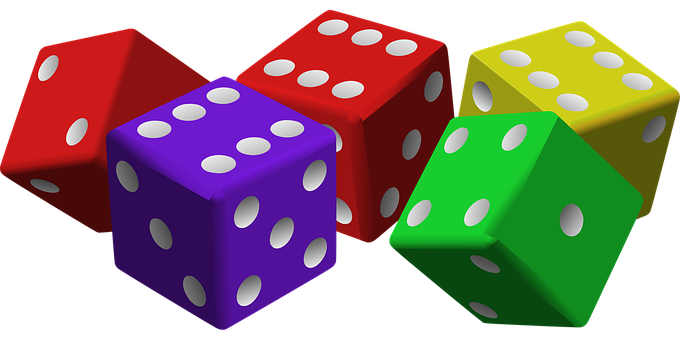
Dice, Game, Luck, Gambling, Cubes, Red

Roll 4 dice and use the numbers facing up.  Then combine with 3 operations to find a total of 27.

Saturday, May 29, 2021

Warm-up

Mathematics, Pay, Digits, Number, Four

Choose 4 different digits between 1 and 9 and use 3 operations to end with a total of 22.  You may use each digit only once, no repeating digits.

Friday, May 28, 2021

Levels Of Communication In Mathematical Discourse


As math teachers, we know we need to encourage mathematical discourse but as is often the case, we are told to do it but are not given the training to accompany the mandate.  I usually end up doing a bit more research to learn more about the topic so I can do a better job.  

Mathematical discourse is about helping students learn to talk about mathematics.  The discourse can involve six different forms of conversation but the choice of form indicates their level of mathematical literacy.  In the first level, they might use ordinary language which uses non mathematical language and vocabulary to convey ideas.  Instead of numerator, they might talk about the number on the top or division with the house. They use the language they have to communicate their ideas.

Next, they might use mathematical terms when they write or speak about ideas such as the cubed root of eight is two.  It is as if they can speak or write sentences that could be translated into symbols.  The third type of communication involves writing down the mathematical sentence using the proper symbols such as "x < 3" and are able to state that a number is less than three.They understand the connection between the symbols and the mathematical sentence.

The fourth type is the one where students are able to create models, diagrams, pictures or other visual representation to share mathematical ideas.  This connects abstract and concrete. Next is the ability to share unspoken assumptions or know what the non mathematical parts of a problem are such as when calculating the amount of sod needed for a 6 by 8 foot rectangular area and knowing what sod is.  Finally is the quasi-mathematical language are students who are missing certain words in their vocabulary, making it harder for them to express themselves mathematically.

Furthermore, the teacher can use these levels of communication to assess where the student is on the spectrum and to determine what they know or understand. It is the perfect opportunity to provide scaffolding to help students move from using non-mathematical language to using the proper terms and the associated representations.

As students develop mathematical literacy, their ability to engage in higher level discourse increases so they are better able to communicate their ideas, thoughts, and understanding.  For fluency students need to be able to create illustrations, drawings, or use manipulatives to provide a visual representation along with symbols, words, and correct vocabulary.

Next time, I'll look at ways to help students improve their literacy.  Let me know what you think, I'd love to hear.  Have a great day.

Wednesday, May 26, 2021

Personalizing Word Problems.

I know when I was in high school, I hated word problems.  Most of the problems I ran across were on situations, that were totally irrelevant to me.  I'd see problems that talked about going so many miles, across multiple states at a certain speed but I lived on an Island you could circle in less than one day. 

 Or those problems where one train left New York City at 8 am and another train leaves from Atlanta two hours later and trying to figure out when they would meet. I knew more about traveling by buses than I did in regard to trains. 

Then there were the names of the people in the word problems were John, Susie, or Linda when everyone I knew had other, more exotic names like Kiko, or Juan.  For most of my teaching career, I've lived in places with planes, boats, or snow machines and students with names like Dove, Apala, or Kanaya.  

I began rewriting word problems so my students could relate to them better.  I replaced the names with names of my students so they felt a more personal connection.  Instead of trains, which most students have never seen, let alone ridden, I used snow machines or ATV's so they knew more about the vehicle.  Most villages in Alaska are not connected to any other village by road so students don't always relate to diving 6 hours away by car but they might understand traveling 6 hours to go to another village to participate in a dance festival.

In addition, I have to change some of the prices listed because certain items always cost more in the villages.  For instance, gas tends to run $6 per gallon rather than $2 or $3 in other places.  You might spend $12 for four ears of corn or a pizza can run like double the normal cost.  

By rewriting the problems to use names and situations students are more familiar with, then are more likely to feel as if they are dealing with something they understand. They find it easier because they know the situations.  This way, they apply the mathematical concept to something they know, they understand, and can relate to fully.  Now there are some situations that are quite difficult to adjust for the bush and sometimes takes a bit of thinking but it is worth the effort because students are able to access prior knowledge and connect with the mathematical concept.

Once they've established that connection, it is easy to make minor changes such as having them use a car instead of a boat, change the speed of the vehicle, and work towards the original problem. Although we often work on word problems with students, it is usually just one of this and one of that which apply the mathematical concept but we seldom use multiple applications with variations for the same concept.  

I wish I could do more of these but time always seemed to be a limiting factor.  Let me know what you think, I'd love to hear.  Have a good day.

Monday, May 24, 2021

Increased Understanding Through Talking.


I really hate the way schools often look at ways to improve student scores on standardized test.  I've had to "teach to the test", analyze the questions to determine which strand the state test focused on and teach that, and even provide sample questions so students got used to testing type questions. Sometimes we look too much at the test that we forget other ways of helping students improve.

One such way is for teachers to create more situations where students work on talking to each other.  It might take the form of having students divided into pairs to work out different problems that have the same answer. If their answers agree, they did it right but if the answers are different, they can ask each other to explain how they did the work.  This often helps students find where they made a mistake.

Another way is to have students talk their way through word problems so they can identify and apply math terms rather than relying on a memorized process.  They need to discuss their math learning complete with concepts, use mathematical terms, while practicing verbal expression.  In addition, discussing the problems offers safe chances to undergo productive struggle and make mistakes.  

Furthermore, teachers need to include academic language while encouraging students to use it when discussing problems.  For instance, instead of talking about flipping the second fraction, we should be say we are multiplying by the reciprocal so students develop the language necessary to express themselves.

One suggested way of working through word problems, is to have students read the word problem in a small group of no more than four.  The students work on solving the problem together through discussion, expressing ideas, and trying the ideas to see if they work.  Once students have had a chance to work on the material, find an answer before the teacher takes time to explain how to do it.  The last step would be for students to share the way they got the answer.  This is important because it gives students a chance to share and supports the idea that their thoughts are important.  This type of approach can be applied to any topic such as having students work two step equations before they are "taught" how to do them.  

This type of approach does require a bit more planning than the traditional method.  When setting up the lesson plan, one has to identify the academic language students are expected to know at the end of the lesson, the content objective to accompany the language, and a social objective such as using Think-pair-share or group collaboration.  

Now I admit, it is hard to stand back and not give direct answers to student questions which tell them how to do it.  Many of us need to learn how to respond to student request for help so they can actually experience productive struggle.  My district requires we follow the textbook, it's pacing guide, and we don't give students enough time to actually experience something like this.  

So let me know what you think.  I'd love to hear. Have a great day.

Sunday, May 23, 2021