Showing posts with label Computational Thinking. Show all posts

Wednesday, May 31, 2023

Ways To Improve Computational Thinking.


Last week, we looked at what computational thinking is and today, we'll look at it in general first, then specifically for math since both are important.  This is especially true if you work with teachers of other subjects so that you can work on it across the curriculums.

The first part of computational thinking is decomposition of the task, or breaking it down into smaller tasks.  One way to do this is to ask students to write a set of instructions on how to do a basic task such as mashing potatoes, planting a potato, or putting on your socks.  My English teacher did this to us in high school.  Although we did it in English, she chose a mathematical topic. She had us write the instructions on drawing a square.

We were given the activity in class but she let us work on it at home for a couple of evenings.  On the due date she collected all our instructions and set about following each and every word to determine who had the best set.  We laughed hysterically because people forgot to give a direction on the lines so she'd head off the paper or start in the middle of the page and she had fun.  I admit, I had a great set of directions because I wrote them and had my parents try to follow them so every time the directions messed up, I rewrote them until they were 100 percent correct.  This is an activity I do in my math classes and it is awesome.

Next is pattern recognition.  In foreign languages, it would be discussing the patterns used for the endings of verbs depending on the verb and tense.  It might also be dividing words up into piles based on if they have long or short vowels. It might be sorting words in science or math so the words associated with certain concepts end up in the same group.  Other possibilities for math include dividing equations into slope (positive, negative, horizontal, or vertical), how any steps needed to solve it - such as one, two, or multipole step equations.  When you do a sorting activity, have students explain the criteria they used to sort the items so they are sharing their thinking.

Let's look at ways to learn more about abstraction.  Have the students write down what they know on a topic but give them a final word count because this helps teach them to get rid of the irrelevant details. You'd start with a nice word count like 100 words and then cut it down to 90. then 80 so they learn to work with fewer words.  Another activity is to read a passage, looking for very specific information.  In English, you might have students read a description of a house and then have them find the details a house buyer might want before having them reread the description looking for details a housebreaker needs. For math, give a paragraph on quadrilaterals and ask them to read it looking for the details for squares, or rectangles, or other shape.  

Finally, is the algorithm which is one of those wonderful things we see a lot in math but in other topics such as English, it is asking students to write the instructions to make a peanut butter and jelly sandwich. In math, it might be asking students to explain how to solve a type of problem, prove something, and they could do it via a video or written poster.  

This site has some great lesson plans for algorithms for K to 8.  The lessons come with everything you need but they are more general activities than math specific.  I simply tell my students that they need to communicate using English so they need to do this.  On the other hand, this place has lessons specifically designed to teach computational thinking in all subjects including math however, they do not have a ton of lessons available.  

I have to have some things for the first week that do not start them fully in math, so this topic is great for that time.  Let me know what you think, I'd love to hear.  Have a great day.

Friday, May 26, 2023

Improving Computational Thinking.


I plan to return to the idea of suggested games for students to play over the summer but I got diverted with the idea of helping students improve their computational thinking.  Computational thinking is defined as an interrelated set of skills and practices needed to solve complex problems.  A good definition for students is that computational thinking is learning to think like a computer or breaking your data down into a form a computer can use.

Although we often associate computational thinking with math, it can be applied to any subject. It is just learning to rearrange your thoughts logically.  Computational thinking is composed of four parts, decomposition, pattern recognition, abstraction, and the algorithm. 

Decomposition refers to breaking the problem down into smaller, more manageable parts. This is something we do everyday when we clean house, work on a project, or build something.  If we clean house, we break it down into smaller tasks such as starting with the kitchen.  We might rinse dishes and load the dishwasher, clean the sink, the area around the sink, etc.  We break the whole task into a step by step process.

Pattern recognition is just what it sounds, learning to recognize the patterns we see. In order to break things down, it is helpful to recognize the patterns.  In math, we do it all the time but it happens in other subjects such as in foreign languages, we learn endings based on the type of words and the case or tense.  The world is made up of patterns so it is important for students to learn to identify the patterns.

Abstraction is the ability to cut through all the information available to select only that which is important.  It is like reading a mystery and sorting through clues to separate the red herrings from the actual clues. In life, it would be like going to the store and only buying what is on the grocery list rather than what ever appeals to us.  In math, it would be like reading word problems and taking only the things we need to solve the problem.

Finally is coming up with the algorithms. Algorithms are the step by step instructions to do something.  We follow an algorithm when we get dressed, when we follow a recipe to cook, or follow that plan to make a bookcase.  In math, the algorithm is the process we follow to find the equation of a line from two points, or solve two simultaneous linear equations, and more.

Although we associate computational thinking with math, science, or computers, it is actually found in just about every subject, and life in general.  It is a skill used when we plan research papers, manage projects, figure out which work to delegate to whom to get it done. 

Now that computational thinking has been broken down, the next step is to discuss how to teach it since this is an important enough subject to teach to all grades and all students.  So next week, I'll tackle the topic of discussing how to teach it.  Let me know what you think, I'd love to hear.  Have a great day.

Monday, May 7, 2018

Computational Thinking

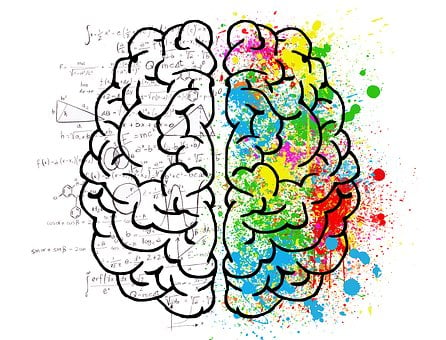
Brain Mind Psychology Idea Hearts Love DraI forgot where I read that schools should be teaching computational thinking across the curriculum rather than saving it for computer science. 

Of course being me, I needed to determine exactly what is meant by computational thinking.  After all, computational thinking is usually associated with computer science because it is the way programmers break down a problem in order to create a solutions.

Computational thinking is broken down into four sections.  It is defined as being able to processes, data, or problems into smaller, more manageable pieces.  It requires a person to find patterns and trends in that data along with identifying what created these patterns.  The final step is to create step by step instructions for solving the original and similar problems.  In other words, decompose the problem, recognize the pattern, focus on the important information only or abstraction, and creating the solution.

We can see how to use it in Math but what about other subjects.  In literature, students can break a poem down to analyze its meter, rhyme, structure, tone, diction, etc.  In Economics, it is possible to find the cycles of rises and falls of a country's economy.  In cooking, people create recipes which are step by step instructions.  In chemistry, it is possible to explain the rules for chemical bonding.  Each of these matches a step of computational thinking.

Other examples found in education in areas other than math can be:

1.  For civics, government, or history look at the American justice system system to identify problems and propose solutions so it is more equitable and fair.

2. In P.E. decompose LeBron James's dunk using motion tracking data to understand his throws better.

3.  Back to History, students can create their own civilizations, selecting natural resources, and technologies to see how they grow over the years based only on those two factors.

4. What about creating 3 dimensional amusement parks based on the human body with blood cells represented by bumper cars, and neural networks based on zip lines.

5.  Analyze real world earthquake data in science to determine where the most seismic activity occurs so as to determine how much the plates contribute to them.

6. In Math, have students prepare a list of draft choices for a fantasy football or basketball league by looking analyzing performance data.

If you'd like to learn more about it, google offers a nice class on computational thinking while you can find lesson plans here for math, science, social studies and ELA.  I took a look at some of the lesson plans and they look nice. Although, they are geared for upper elementary, they could easily be adjusted and used in middle school and high school.

Let me know what you think, I'd love to hear.  Have a great day.