Showing posts with label Fact Fluency. Show all posts

Friday, September 12, 2025

Teaching Math Facts In Middle School Or High School.

Free Children Win photo and picture

 For many middle school and high school students, math facts feel like a boring, repetitive chore, especially if they don't know their multiplication tables. By this age, students often have significant gaps in their foundational knowledge, which can impede their progress in more complex topics like algebra and geometry. Integrating games, especially digital ones, can make math fact practice engaging and effective, turning a dreaded task into a fun challenge.

Before we get to the games, let’s quickly understand why fluency is so critical, even for older students. Math fact fluencyis the ability to recall basic arithmetic facts quickly and accurately without conscious effort. Without this automaticity, a student's working memory becomes overloaded. Instead of focusing on the steps of a complex problem—like solving a multi-step equation or simplifying a fraction—they are bogged down by basic calculations. This "cognitive bottleneck" can lead to frustration, errors, and a general disinterest in math. Fluent students, on the other hand, can devote their full mental energy to higher-level concepts.

Games are a powerful tool for building fluency because they leverage what students naturally enjoy: competition, rewards, and play. Digital games, in particular, offer several key advantages They often provide motivation and engage students.  The gamified elements—leaderboards, badges, and unlockable features—provide a continuous stream of positive reinforcement. This intrinsic motivation encourages students to practice for longer periods without feeling like they are doing "homework."

Digital games provide instant feedback on correct and incorrect answers. This allows students to immediately identify and correct their mistakes, reinforcing the correct facts without a delay. This is a much more efficient learning cycle than waiting for a teacher to grade a worksheet. Furthermore, many modern math games, like Prodigy or Legends of Learning, use adaptive algorithms. This means the game adjusts the difficulty based on a student's performance, ensuring they are always challenged at the right level. If a student struggles with a particular fact family (e.g., multiplying by 7), the game can present more problems from that set until fluency is achieved.

To effectively use games to build fluency, it's essential to be strategic. Start students on the programs by having them  take a quick digital assessment to pinpoint their specific knowledge gaps. This way, the practice can be targeted and efficient.  In addition, schedule  short, consistent periods for game-based practice. Even 10-15 minutes a day can make a significant difference. Foster a culture of play, not pressure.  While many games have competitive elements, the primary goal should be individual improvement. Encourage students to track their own progress and celebrate their achievements, reducing the pressure to "be the fastest."

By integrating digital games into math education, we can transform the tedious task of math fact memorization into an enjoyable and effective experience. This approach not only builds essential foundational skills but also helps cultivate a more positive relationship with mathematics as a whole.  Let me know what you think., I'd love to hear.   Have a great weekend. 

Monday, April 25, 2022

Practicing Fact Fluency Using Technology


In many school districts, students have not had proper math instruction over the past two years.  The students I work with have not had much math since the pandemic started due to being red.  They do not have access to the internet and their reading levels are quite low so they have trouble following any written instruction I include in take home packets.  So now that they are back in class, I'm slowly discovering their weaknesses.

I gave my students an assignment the other day that required them to read a verbal description of money and translate it into a written amount.  The description might be three dollar bills, six quarters, three dimes, and four nickels.  I discovered that half of them didn't know a nickel was worth five cents and about the same number couldn't multiply six times 25 or three times ten.  One of my students did have a strategy to account for that so she could do the answers.  She'd draw the number of coins and then skip count to get the answer.

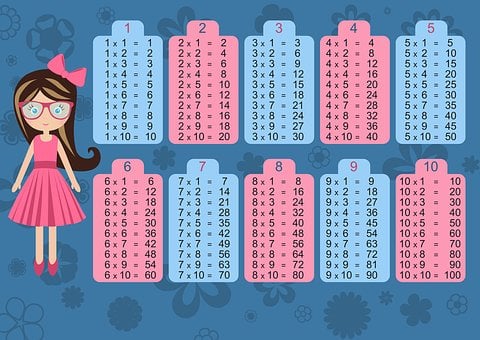
Since my students do not know their multiplication tables, I have to include time in class for them to practice.  Usually, I incorporate it into the assignments but sometimes I have to look at ways for students to get a focused practice session.

One way is to have them use apps or web based programs for practice. The assignment should not be one in which they fill in the blank in ordered tables such as 2 x ___. = 2, 2 x ____ = 4 etc or 2 x 1 = ____, 2 x 2 = _____ etc because in the first they understand they have to write in the numbers 1,2,3..... in order.  In the second one, they can skip count to the end without really learning their facts.  Therefore, one should look for a program or app that has lets them solve problems that are not in order so they can't use a pattern to complete the assignment.

 One iPad app I've had students use is something called Sushi Monster which has them building fact fluency for both addition and multiplication.  It has seven levels for addition, five for multiplication and each level is made up of four rounds.  Each level targets 14 different numbers and if a student redoes a round because they didn't do well, or they need additional practice, the app uses new numbers so they can't write down the answers to use again. It also increases speed so they get faster at using their fact fluency.  The app is made by Houghton-Mifflin and best of all, it is free.  I have used it with both middle school and 9th graders effectively before.

Another free to download app is called Monster Math. This one is geared for grades one to five but it can be used for higher grades.  It allows students to practice all four operations in a game format and it is set up so students can practice multiple skills at once while meeting the common core standards.  The program uses stories and adaptive technology to set the expectations for where they are and not where they should be. In addition, it is set up with voice over narration so students can follow along. Another nice thing about this app is that it allows students to play with others if you want a more competitive game.   Although it is listed as free and can be used it does have a subscription option.

Then there is Prodigy games which is a web based online game site that is free. It is easy to sign up for and can be done at home or in school.  In addition, students can access it with or without a class code but if the student does it at home, they need permission from their parent to access it for more than one month.   The game site has students answer math questions to complete quests and earn in-game rewards and it is good for students up to the 8th grade but could easily be used in high school.

I'll be back next time with games that can be done in the classroom without technology.  I'm including nanotechnology based games because many schools do not have great internet including mine.  We have to quit using the internet if there are students are doing online testing otherwise people get kicked off.  Let me know what you think, I'd love to hear from you.  Have a great week.


Thursday, May 16, 2019

Why Memorize?

Doll, Baby Girl, TeacherThere is a lot of discussion concerning the memorization of multiplication facts.  Many elementary teachers I know think that if they haven't learned their multiplication facts by a certain age, it really doesn't matter because there are calculators and charts.  Unfortunately, as a high school math teacher I've seen the effects.

I've seen students sit there skip counting their way through 8 x 4  because they don't have fact fluency.  When they have to skip count or stop to use a calculator, it disrupts their flow and they often have trouble learning the process to solve a problem.  They have difficulty factoring, finding GCF and LCM, and fractions which makes it harder for them to pass the math class.

In addition, many students who do not know their multiplication tables, cannot divide, and when tested end up well below grade level.  This makes it more likely students will get further and further behind until they are unable to do high school math.

According to one study done by the Stanford School of Medicine, its the hippocampus in the brain that helps provide scaffolding for learning math fluency when learning moves from counting on fingers to pulling facts from the brain.

There are other studies which indicate that students who do not develop math fluency will continue using less efficient strategies such as counting on fingers thus finding it difficult to move to automatic recall.  There is a developmental sequence when children move from beginning fluency to full fluency.

1.  Finger counting where they add or subtract on their fingers.

2.  Verbal counting strategies where they add and subtract using fingers from the starting number to the answer.  I include skip counting for multiplication and division with this because many of them learned to skip count well but did not move to fact fluency.

3. Decomposing or splitting strategies which allow them to break down facts they might not already know such as 8 x 12 is the same as 2 x 12 x 4.  Too many of my students who arrive in high school do not have this strategy down and haven't been taught to do it.

4.  They are able to retrieve facts automatically from their long term memory.  When they get to this stage, they are able to focus on learning the new material rather than forgetting where they are because they just spent several minutes figuring out 5 x 8.

In addition, if students do not develop fact fluency, they have a higher chance of dropping out, rather than graduating because they struggle and eventually give up but there are things we as teachers can do to help students become more fluent.

One recommended methods to help increase fluency is by using  drill and practice via flash cards, software, or even an app on their computers.  From personal experience, older students tend to prefer the drill practice in the form of a game because they are used to games.

Another method is to use the Cover-Copy-Compare.  The teacher prepares a worksheet with no more than 10 completed problems on the left side of the sheet.  The student studies the problems, then folds the left side over so the problems are now hidden and writes down the work from memory one problem at a time.  They then check their work by comparing it with the original.  If it is correct, they move on, otherwise, they study the problem they missed, cover it and write it down before checking the answer when done.  This step is repeated as often as needed until they get it right.  At this point they move on.  They continue until they have done all the problems correctly.  A student is considered proficient when they can repeat do the same problems three times.

Students can make their own flash cards out of 3 x 5 inch index cards.  If they do it this way, they can work in pairs where one student holds the card up with the answer facing themselves while the other student tries to answer the problem.  They can also access one of those apps which allows them to create their own virtual flash cards and the app tests them so they can do it whenever they want.

I like to set up races where a paper has say 8 problems.  The students are in rows, one behind the other.  I give a paper to the first student in each row face down. When I say go, the first person turns it over and answers the first problem before passing it to the second student who answers the second problems and so on to the end of the row.  If I have fewer students than problems, I sometimes have them send it back down the row to the front until all the problems are answered.  The row with the most correct answers in the quickest time, wins a small prize.

Let me know what you think, I'd love to hear.  Have a great day.