Showing posts with label Mindset. Show all posts

Wednesday, September 30, 2026

Building a "Math-Positive" Classroom Culture

Walk into almost any room of adults, and it won't take long to hear someone proudly declare, "I'm just not a math person."

This pervasive belief—that mathematical ability is an innate trait you either possess or lack—often takes root early in school. Math anxiety can paralyze students, causing them to freeze up, avoid taking risks, or shut down entirely when faced with a challenging problem.

To break this cycle, educators must intentionally cultivate a math-positive classroom culture: an environment that actively dismantles anxiety, fosters a growth mindset, and reframes mistake-making as an essential engine for learning.

In a traditional math setting, a mistake is often viewed as a failure or a signal of low ability. In a math-positive classroom, mistakes are treated as rich learning opportunities. Try using this tactic.  Start class by highlighting an incorrect response from a warm-up exercise. Anonymous and celebrated, analyze the work together as a class. Praise the student’s logical starting point before identifying where the reasoning deviated. Include brain science information into the lesson.  Teach students that neural connections grow stronger when they struggle with difficult tasks. Framing intellectual friction as physical brain growth helps remove the shame associated with getting an answer wrong.

A major contributor to math anxiety is the historical emphasis on speed, such as timed multiplication tests or praising the first student to raise their hand. Fast processing is not synonymous with deep mathematical thinking. Teach students to use think time by enforcing a strict "wait time" rule after posing a question to give every student space to process without feeling rushed. 

Show the class the value of multiple pathways. Celebrate unique methods for solving a problem rather than solely rewarding the fastest standard algorithm. Asking "Who solved this a different way?" validates creative problem-solving over speed.

The words teachers and students use shape classroom mindsets. Replacing fixed-mindset phrases with growth-oriented language shifts how students perceive their potential. Rather than saying "This is easy!" say "This might feel challenging at first, but we have the tools to figure it out". Instead of saying "I'm not good at math." say "I haven't mastered this concept yet."  Don't say "Great job, you're so smart" Go with "Great job! I love the strategy you chose to work through that tough problem.

Remember anxiety thrives in isolation. Using collaborative structures—such as non-permanent vertical surfaces (whiteboards on walls) where students work in small groups—lowers the risk of making mistakes. Thin about using tasks with a low floor (accessible to everyone) and a high ceiling (extensible for advanced learners) ensure that every student can enter the problem-solving process confidently without feeling left out.

Building a math-positive culture doesn't happen overnight, but the payoff extends far beyond test scores. When students learn to embrace struggle, view mistakes as data, and trust their ability to persevere through tough problems, they don't just become better math students—they become resilient, confident lifelong learners. Let me know what you think, I'd love to hear.

Monday, August 11, 2025

Introducing Mathematical Mindset

Free Questions Question Mark vector and picture 

Creating a strong mathematical mindset in students is crucial for their success, and the first week of school is the perfect time to start. A mathematical mindset is the belief that everyone is capable of learning and excelling in math, and that intelligence is not a fixed trait but a skill that can be developed through effort and practice. This concept, popularized by Stanford professor Jo Boaler, directly challenges the old notion that some people are just "not math people." It frames mistakes not as failures, but as valuable opportunities for the brain to grow new connections.

Building a mathematical mindset from day one is vital for several reasons. Firstly, it combats math anxiety, a common issue where fear and self-doubt prevent students from engaging with the subject. When students believe their abilities can grow, they are more willing to take risks and persevere through challenging problems. Secondly, it fosters a love for learning. When the focus shifts from getting the right answer quickly to understanding the process deeply, math becomes a subject of curiosity and discovery. Finally, it equips students with real-world problem-solving skills. Life isn't a series of easy, one-step problems; it requires a flexible, creative approach—exactly what a growth-oriented mindset encourages.

The first week is about setting the tone by using a few simple activities that can make a big impact.  Begin with the brain science and mistakes.  Start with a conversation about the brain. Explain the concept of neuroplasticity—the brain’s ability to change and adapt. Use a simple analogy, like a muscle getting stronger with exercise. Explain that when we make a mistake, our brain is actively working, sparking new connections. This reframes mistakes from something to be feared to a sign of hard work.

Next look at "My Favorite Mistake" activity.  Ask students to share a mistake they've made in math that taught them something valuable. This low-stakes activity helps normalize errors and encourages a classroom culture where it's safe to be wrong. As the teacher, share one of your own to model vulnerability.

Then there is the  "What's the Answer?" vs. "How Did You Solve It?" Approach. During initial problem-solving, emphasize the process over the final answer. When a student gives a correct answer, follow up with, "That's great! Can you show me how you got there?" When an answer is incorrect, ask, "Tell me about your thinking." This shifts the value from the result to the reasoning, validating every student's effort.

Finally, use low-floor, high-ceiling problems. Introduce a problem that everyone can access but has no single solution or a simple answer. For example, "How many different ways can you make 24 using a single-digit number, a different single-digit number, and one operation?" This allows all students to participate and find success at their own level, while challenging more advanced students to find creative and complex solutions.

By dedicating the first week to these foundational ideas and activities, you're not just preparing students for a year of math—you're equipping them with a powerful tool for all learning: the belief in their own potential.  Let me know what you think, I'd love to hear.  Have a great day.
Monday, June 18, 2018

Different Mindset

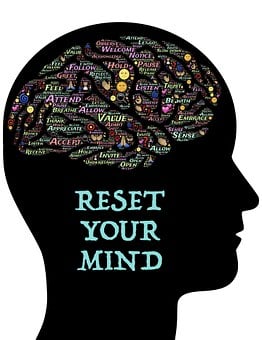
Mindset is something important when it comes to learning in general. We talk about students having a closed mindset if they think they are unable to learn math since they are not good at it or do not have the natural ability.  It has been found with an open mind, they are more likely to do better in math.

Unfortunately, there is another area in which the open or closed mindset is found within education. It is found in some students, teachers, and administrators.  This attitude has to do with the value of incorporating technology into the classroom,

Although we know technology is neither good, nor bad, it is how it is used within the classroom that counts.  We cannot just throw technology into the classroom because it is there. We have to have a purpose foe every use of technology when integrating it into our lessons. 

In addition, we have to prepare students for jobs in the future without knowing the exact skills required except, those jobs will require technology, collaboration, and communication.  It may require collaboration among coworkers who live in different geographic locations.  It might require the use of virtual rooms.

We need to make sure students have the knowledge and ability but if many of the students, teachers or administrators have a closed mindset, it makes it harder to imbue students with the knowledge to compete in this new world.

 Many of my students have developed the mindset that their learning can only be accomplished if they are using a computer. If they do the same assignment on a device such as a tablet, they argue they cannot learn the material not realizing that both are powerful computing devices.

I have been told by administrators I use to much technology in my classroom.  I should not have them watch annotated videos, do collaborative assignments in google slides.  I have been told my students learn best from the books and I should be hitting the books hard.  I have also been told that by allowing students to use technology, I am giving them the opportunity to get all the answers off the internet.

I have had other teachers tell me that students learn best from reading and doing work from the book.  No other way works as well.  They have also insisted that I am harming them by requiring students to watch annotated videos or ask them to write an explanation for why they chose to solve a problem the way they did.

To me, all three situations show a closed mindset because they are restricting their learning.  They are stunting their growth at a time when they need to expand their repertoire of skills for a rapidly exploding world of technology,

It reminds me of a couple of lines from a song by Bob Dylan. ‘The old roads are rapidly changing, get out of the new one if you can’t lend a hand for the times they are a changing’

Let me know what you think, I would love to hear.

Wednesday, June 14, 2017

Mindset.

Mindset, Mindfulness, Meditation There have been multiple books and articles published recently on the general topic of mindset.  It comes down to mindset are said to either being fixed or one of growth.

As you probably know, a person with a fixed mindset believes certain attributes such as intelligence, talent, or even ability to do math is fixed and cannot be changed.  They believe talent is set and you cannot develop it. This is the mindset I often run across in both students and adults when they talk about math.

Its expressed often as "I can't do math." or "I don't have the ability."  So often if the parent says this enough, students arrive at school with the same attitude.  Its the standard excuse for why someone is not good at math.

On the other hand, a growth mindset indicates the person believes attributes such as intelligence or ability can be learned with hard work and dedication.  Talent is not enough.  I see students who will practice basketball for hours on end but are unwilling to try in math because they are convinced they do not have the talent for it.

Is it possible the closed mindset of "I can't do math" does not mean they are unwilling to learn but its more they don't know how to find the answer a problem?  Is it possible they don't know how to ask the right questions? Perhaps we need to teach students to articulate their questions rather than remaining silent.

So how does one go about helping students change their mindset from fixed to open?  There are ways.  One thing is to change the classroom environment to one of encouragement where they can work on complex and interesting problems.  Allow them to try their ideas, fail, and retry.  Where they learn it is acceptable to fail because failure is a part of learning.

According to something I read, teachers who encourage multiple attempts at solving a problem are more likely to have students with the growth mindset. It has also been suggested a teacher only provide help when they are asked and students should have the opportunity to resubmit work.

Too many students who struggle solving problems, are likely to decide they are not a math person.  I have students who would rather fail than try because they've decided they are unable to do the problem.  I have two signs hanging on my wall.  One sign says "I haven't practiced this enough." while the other states "I haven't learned this yet."  Both important phrases are important in my opinion because they reinforce the idea they can learn.

In addition, people often think mathematics is composed of calculations rather than seeing it as a topic filled with patterns.  Consequently, they think those who can complete calculations the fastest are the best in math.  In fact, most good mathematicians are slow because they stop and think about the problem.  I think if we can convince students its O.K. to take it slow and do a good job, this might help students change their thinking.

It is important to teach mathematics using open questions such as find as many rectangles as you can with an area of 24 square inches rather than asking what is the area of a rectangle that is 12 by 2.  The first problem has multiple answers and it requires students to think deeply, using their own ideas rather than if they have to answer the second one.

These are a few things to think about when trying to help students change their mindset.  I don't know if we can change everyones mindset but we can try.

Let me know what you think.  I'd love to hear from everyone.


Wednesday, February 1, 2017

Encouraging Growth Mindset.

Graph, Growth, Finance, Profits  It is February 1st.  I always surf the list of 80% off books on Amazon on the first day of the month to find books I want to buy.  Today, I found one I am truly interested in.  Its "The Growth Mindset Coach" by Annie Brock and Heather Hundley for $1.99.

No I haven't read it yet but I did buy it so I can download it to my tablet and spend time reading it.  It has a 4.5 star rating from 36 people.  Aside from the price, the big reason I down loaded it is simple.  It has both sample lessons and a month by month list.  Each month corresponds to a specific theme, complete with ideas, things to think about so you can use it all year long.

As far as I can tell it is a general book but it provides a starting point for those of use who need ideas.  This book is not specific to math since one author is an English teacher while the other is an elementary teacher.  I will get back to you on this book once I've read it.

In the meantime I found a lovely site called Growth Mindset Maths from England.  First thing I saw on the page was a great poster with a list of beliefs including one focusing on choosing challenging problems so we can keep learning and not giving up.  You can download the poster and place it around your classroom.

In addition, they provide some great sheets to help you help your students change their thinking.  For instance, the one on modeling a growth mindset has what to say instead of what is being said.  An example would be having the student ask themselves what they missed in the process rather than deciding they are stupid.  Or changing the "Its too hard" into "This is going to take some time."

There is also a wonderful presentation which helps students go through an activity which has them looking at ways to change thinking about things while they take notes to reinforce the material.  In addition, you'll find surveys and great material to help your students gain a growth mindset.

I plan to implement many of my suggestions in my classroom to try to eliminate the I can't or It's too hard attitudes. I have a few students who just cling to those beliefs so I need this to help me work on changing their mindset.

Let me know what you think.