Showing posts with label Vocabulary. Show all posts

Friday, June 12, 2020

Vocabulary Activities For Math

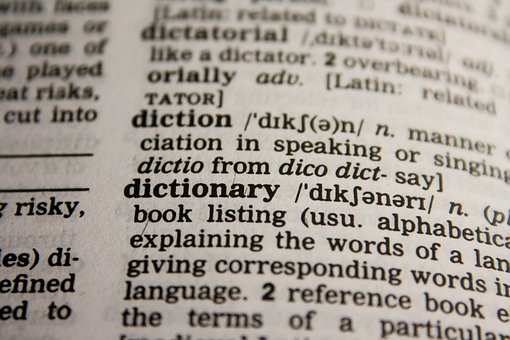
Grammar, Abc, Dictionary, Words, Letters

 Vocabulary is such an important part of teaching math because many of the words used have several meanings, some of which may not deal with math.  If a student has a good mathematical vocabulary, they will also be more proficient because the vocabulary offers them the ability to access concepts.

If students develop a good mathematical vocabulary it helps them understand exactly what the question is asking.  As mentioned before, many mathematical terms have both a general meaning and a specialized meaning and it is important for the student to know both.  Many times, there are students in the class who are English Language Learners who may not yet have acquired all the vocabulary needed to do well in mathematics. When students have a good vocabulary, they are able to participate in mathematical discussions with more ease because they can express their ideas properly.

When teaching vocabulary in class, it is important to begin with the vocabulary they already know before introducing the mathematical vocabulary.  The vocabulary they have may be informal in that they describe a rhombus as a diamond due to the shape.  The teacher would then affirm it did look like a diamond and was called a rhombus.  In other words, repeat back the language used by the student to include the correct mathematical terms because it acknowledges the student has some base knowledge.  It is important to use the mathematical language even if it is paired with a regular description such as area or the inside part of the shape so they build an association between the word and a definition.

Second, the words must be taught explicitly to the student and they must be given a chance to use the new vocabulary so they learn it.  The words can be introduced in a pre-teaching session, taught during the actual session by using definitions, pictures, drawings, and examples.  Post the vocabulary on a word wall or have students write them into their personal dictionaries they are making.  Afterwards, review the words by having students define each new word and provide both an example and non example of the word.  Always teach and use the words in context.

Next, have a classroom word wall to post the new words along with pictures and definitions of each word if the picture is not enough.  For instance, if the chapter has the word line, you might draw a straight line all the way across the page.  Most high school students know what a line looks like so you may not need a definition but you might need to include a definition for the word "betweenness". 

Another possibile activity is have students fill out vocabulary cards using the Freyer Model.  If you haven't used them, they are great because they have students have students create definitions, list characteristics of the new world, provide examples and non-examples to show what it is and what it isn't.  The word always goes in the middle.  If you do a quick search, you can find templates that have several on each page.  

Finally, use math journals to help reinforce the use of mathematical vocabulary.  At the end of class have students use a writing prompt to think about the lesson itself.  One such prompt could have students begin "Two ways to solve this problem are........." or "One problem I solved was........".  These types of prompts have students reflecting on what they learned and on the concept taught in class.  It encourages self reflection.  

Sometime in the near future, I'll talk about ways to use word walls and writing prompts in class to help them develop a better mathematical vocabulary. Let me know what you think, I'd love to hear. Have a great day.

Wednesday, July 24, 2019

Improving Vocabulary in Math

Dictionary, Words, Grammar, Abc, LettersVocabulary plays an important part in the math class because if a student does not understand the meanings, they will struggle.  Unfortunately, just copying out the definitions doesn't mean much because copying does not require students to really think about the meaning.  It is much more effective if they can define it in their own words.

There are many ways to help students learn vocabulary other than by copying words and their definitions.

One way is to create a word wall with examples of what it is and is not, a picture, and a definition in their own words.  Students create everything to go with the word.  The words on the word wall can then be used in different activities such as creating statements about the words that students have to decide if they are true or false.  Or make statements using always, sometimes, or never such as "two odd numbers added together make an even number."  which would be always.

A similar activity is to have student go on a word hunt looking for the words in a specific part of the book as a pre-reading strategy.  They look at the word, decide if they understand it or if it needs to be clarified.  If they need more info on it, they can add it to their questionable list.

Have students create vocabulary cards with the word on one side and place the definition and a picture on the other side.  All students use the same word list.  Once everyone has a card done for each word, divide students into two groups.  One group makes a circle while the other group forms a circle on the inside facing the other group.  The outer group holds up a word for. the other person to define, then the inside group chooses a different word and shows the definition for them to come up with the word.  The groups move so each person has a new partner, repeating the process.

Always discuss the multiple meanings of words such as product.  It is always a good idea to have students brainstorm meanings for the words and then discuss all the meanings within their proper contexts so students understand them better.  This is especially important if you are dealing with English Language Learners because it helps build a better language foundation.

Have students find places outside of school where the words are used.  They just can't say they saw it, they have to provide proof.  So if they see a sale poster offering something at a 35% discount, they could take a picture of it and share it with the class or email it to the teacher.  This gives them a chance to see the math used outside of the classroom.

Pass out stacks of vocabulary words to groups of students and let them divide them into categories.  Once they are done, they explain how they divided up the words and the categories they used to classify the words.  This way, there is no one right way and it allows students a chance to use higher order thinking skills.

Give each student a vocabulary word and let them create a cartoon with the definition, picture, examples and non examples.  Create a digital version with all of the cartoons to share so everyone has all the cartoons.

Final advice is to always use the vocabulary in the class so students get used to hearing it in context.  It does not help to have students learn the mathematical terms if you are not going to use them in class.  Let me know what you think, I'd love to hear.


Wednesday, September 13, 2017

Math Vocabulary

Dictionary, Words, Grammar, Abc, Letters  Math vocabulary is something my students struggle with.  I try to integrate vocabulary into my classes by using it on a regular basis but I need to incorporate additional activities to keep their interest in learning it.

I know as a child, I hated writing vocabulary words 10 times each along with definitions.  It all became quite mechanical and I never learned to spell them.

I've used the Freyer method before but it isn't enough.  I need other activities designed to use the words more frequently.  So I looked and found some great ideas.  I like the idea of having a math word wall so students know the words they should be familiar with.  Once the word wall is up and students are up to speed, they can then:

1.  Play Pictionary where one student draws a picture of the word and the others guess it.  This works well if students can do a half decent job of drawing but for people whose drawing looks more like scribbles, it can become hysterical.

2. The I AM game.  A student gives the definition of a word beginning with I AM and students have to guess the correct word.  The person who guesses the word does the next I AM clue.

3. The memory game.  Place the words on one set of cards, definitions on a different set of cards or set it all up on the smart board.  Spread the cards out.  A student chooses two cards trying to match the word with its definition.

4.  What is missing.  The teacher removes a word from the word wall before class starts.  During class the teacher asks students to identify the missing word and its definition.

5.  Word of the day.  This works well for small groups of students.  Tell students the special word of the day and they have to listen for its use.  Every time it is used and someone notifies the teacher of its use, their team wins a point.  At the end of the class, the group with the most points is the winner.

6.  Have students create short videos for each word to show they know its meaning.

7.  Play math vocabulary bingo.  Create bingo cards with the needed vocabulary words.  Create the bingo calls using definitions.  You choose a definition, they find the word and cover it.  Once they have five in a row, or cover the whole page, they have a bingo or super bingo.

8. Inside/outside circle.  Each student is given a vocabulary word on an index card.  Students then write a definition and draw and example on the back of the card.   Then half the students form a circle facing outward while the other group form a circle around the other group of students so students face each other. Students give a definition and ask for the word or give the word and ask for the definition.  Then the outer group moves left while the inner one moves right for a new partner.

9. Make each student a Word Wizard by having them find the use of words outside of school in real life.  They have to provide proof such as hearing it on the news (date of broadcast) or finding it in the newspaper (bring article), or a family member used it (bring note.)

10. Have students create vocabulary cartoons using cartoons to create the picture for students to remember along with the definition, word, and cartoon caption.

Hope you enjoy these suggestions.  I plan to try a few later this week in class.  Let me know what you think.

Wednesday, December 7, 2016

Mastering Vocabulary

Wooden, Letters, We, Word, Wall  In math, its harder to teach vocabulary because there are three levels of language involved. 
1. General words such as hello, bye, or good.

2.  Words with both mathematical and general definitions such as plane, or product.

3. Words that are primarily mathematical such as Torus (doughnut shaped), or Polygon.

When we work with students, especially those who are ELL, we need ways to make sure they understand the vocabulary.  I've developed several ways to work on vocabulary.

1.  A word wall - I have a spare place in the room I use for a word wall.  A word wall is a place where you post both words and definitions that students help create.  I came across this 8 page pdf with tons of ideas on using the word wall in class.  The suggestions include having a pairs of students select two words and discuss how they are related.  I love this because it gives suggestions for actively integrating the word wall into teaching.

2. Word cloud - a way of placing all the associated words together such as types of numbers, addition, or subtraction.

3.  Graphic organizers with the word, definitions both mathematical and general, pictures, examples and non-examples.

4. Graphic organizers showing all the words relating for a specific section such as transformations would have translations, dilations, reflections, etc.

5. Flash cards - students create their own digitally or on 3 by 5 cards so they can practice them as needed.

6. Create posters for each word or set of associated words.

7.  Write a short paragraph using the vocabulary words.

8.  Write word problems using assigned numbers and words.

9. Create lists of homophones and then use them in sentences.

This is a short list of possibilities but each one helps students create the knowledge they need to do well in math.

Let me know what your think.

Tuesday, December 6, 2016

Vocabulary - Putting It In Your Own Words!

Geometry, Geometric, Abstract, ArtWhen a student studies mathematics, they are learning a new language.  Many of the words are familiar such as product, plane, or less than but the meanings are not.

All through school beginning in Kindergarten, teachers work on helping students acquire the necessary vocabulary to succeed in math but we don't always teach students how to write definitions in their own words.

When they see a definition such as "It is a decimal number that cannot be expressed as the ratio of two integers and neither terminates nor repeats", if they do not have a solid foundation in mathematical terminology, they will not understand it.  If you ask them to define it in their own words, they might try to copy it and just change out one or two words or they might ask the teacher to tell them what to write.

The other day, I realized I'd never broken down the process of taking a mathematical definition and putting it into their own words.  In fact, they made it to high school without learning the process and it appears teachers in earlier grades are allowing them to just copy material down verbatim without learning the process.  I do not blame the teachers because many students will take the easier path and just copy rather than struggle to learn to use their own words.

I'm not sure if these students have a good vocabulary so they don't have enough words to put it into their own words.  So I took time to demonstrate how I turn a definition into something more understandable.  It was enlightening because some of the students paid close attention to the process.

Wednesdays are my word problem day.  I take something out of the NCTM journals to work on with my students. This last Wednesday, the activity required students to know irrational, rational, integer, whole and natural numbers.  I realized I needed to take time to help them learn to translate the definitions from math into common English.

So I took them through the above definition step by step to look at what each part meant.  By the time we were done with the definition for irrational, they had a great definition, they understood.  I do believe it is important for them to be exposed to the mathematical definitions but its also know what they mean in understandable English.

I admit, I assume they have learned this vocabulary in elementary and middle school but I'm finding they are being taught the processes but not the vocabulary that accompanies it.  I've been working on finding ways to help with that.

Check back tomorrow for ideas on how to increase their understanding of mathematical words and expand their vocabulary.