Showing posts with label etc.. Show all posts

Friday, September 3, 2021

5 Different Ways To Start Class


When I was in my teachers education program, I was told to put something up on the board to get students started while taking roll, or getting them into the right mindset for class.  It might be called a warm-up, bell ringer, or one of several other names.  Unfortunately, we tend to do the same thing every time because it's easier.  So today, I'm going to look at 5 ways to start class so everyday is not the same. 

Begin class with a video.  It might be a video which could introduce the topic such as a scene out of a show where one of the characters is able to say how long it will take the car to arrive. Or it might be a video clip from one of the three act tasks, or maybe it is a trailer type feature you made yourself using iMovie.  What ever the choice, it is going to be something short and sweet which grabs their interest and is related to the concept.  

For instance, you might show bridges or water sprinklers when talking about quadratic functions, or a short cooking lesson for fractions, or even a racing car when discussing rate and time.  You might take pictures you found or hand written formulas and integrate them into one of the trailers you can make in iMovie.  These templates come with music, text boxes, and it is easy to put one together.  It is short and can be quite fun.

Another way to start class is by showing one or more items associated with the concept.  If you are doing interest, you might place money out or for ratios, one can of frozen orange juice and three cans of water. For distance formulas, you could put a toy car out and for the quadratic formula a ball works nicely.  The idea is that you put the object out in front of the class so they can ponder on the up coming lesson.  Give them a minute or two to think about the object before asking them how they think the object relates to math.  Let them brainstorm before you dive into the lesson.

Begin the class with a question that either asks them what they know about a topic, asks them to relate a topic to something they've learned, or what they think about something.  The question could be in a poll, in a google document, or requires whole class discussion, or a small group conversation.  Starting with a question starts the students thinking about the topic.  The question might be general or specific, be based on the topic or a real world application of the concept, or even as simple as what do you know about.....?

Instead of starting seated, throw some movement in.  A simple way of incorporating a bit of movement is to have students use a maker to write an answer to a posted question on a paper or white board while standing.  They then hold their answers up over their head so the teacher can see them.  The teacher goes through the answers, asking each student to sit as their answer is scanned. 

Another variation is to prepare several copies of the same worksheets containing  3 to 5 questions.  Pass the worksheets out to all the students and have them answer the first question.  They need to put their names next to the problem when done to show they did that one.  Then they fold the papers into airplanes, stand up and throw the planes to each other on the teachers command so they have a new sheet.  They sit down, answer another problem, fold it up again and fly it to another student.  When all questions have been answered, collect them to assess later.

Finally, begin class with a mistake.  The mistake might be a common one students made on an assignment, it might be one you created, or one found online. One site Math Mistakes has a collection of math mistakes you can use for inspiration.  Spend the first few minutes of class having students figure out where the mistake happened and how to correct it.  This could be done as a whole or small group activity.  It could be done via google slides, flip grid, or other digital method or it could be done via a discussion.  This activity helps students learn to identify mistakes and use this as a way of learning the material better.

Hope you find this helpful.  Let me know what you think, I'd love to hear.  Have a great day.

Tuesday, March 19, 2019

Times in Music

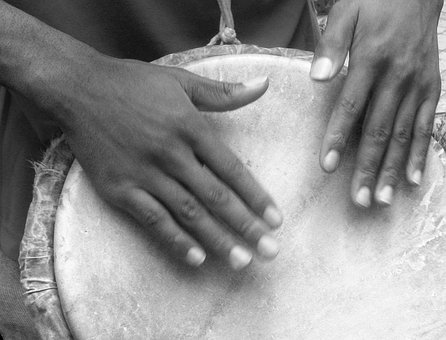
Drum, Hands, Music, Sound, DrumsI was at dance practice last night but its wasn't the usual dance practice you might be picturing.  It was a Cup'ik (Chewpick) practice.  That means they used a standard 4/4 beat with a slight variation but it was usually 4/4.

In the middle of doing a song about two men who went whale hunting one day and ran aground on a sand bar, my thoughts flittered to this piece that was rather complex.

It was like 2/4, then 3/4, back to 2/4, then 9/8 thrown in and it was crazy.  It was extremely easy to get lost in if you were not paying any attention.  In the middle of all this, I realized it's all a form of math.

In a sense, time signatures are a fraction where the top number or numerator indicates the number of beats in one measure of music while the bottom number or denominator indicates the type of note.  So a 4/4 means there are four beats in a measure and each note is a quarter note.

Not quite the same as parts of a whole but not all fractions are parts of a whole.  Look at ratios which are comparisons and time signatures which provide a different type of information. Neither one is really considered Part of a Whole.

Furthermore, musical notes and rests are the visual representation of the time signature.  Any musician can look at the music itself, count the number of notes, look at the value of each note to determine the time signature without looking at it.  This is much like mathematics where its numbers are like the time signature and the representations of those numbers are the notes.

There is a mathematical equation for determining the note value based on the number of flags on the note.  The equation is 2^(-2-n )where n = the number of flags.  If its a whole note, it is 2^0 power or 1 beat where as if it has 4 flags, it would be 2^(-2-4) = 2^-6 or 1/64.

In addition, most pieces of music have repeated sections in them denoted by a repeat sign.  Most pieces of music have some sort of repeating pattern just like math has.  I know I always take a few minutes to look for the repeating pattern in the music before playing it so I don't miss any.

Then you have the vibrating sound waves that are tuned to a certain standard of Hertz.  Middle C is found at about 262 Hertz while other notes are at a different frequency.  If the instruments are not tuned properly, they some times sound off.

Even Fibinocci contributes to music. If you look at a piano, you can see it with the 13 keys that make up an octave.  Five of the keys are black and eight are white and the black keys are grouped in a group of two followed by a group of three.  2 +3 = 5, 5+8 = 13.  Usually a scale is made up of 8 notes where the foundation of a chord is based on the 3rd and 5th notes.

It is said that Mozart based many of his piano sonatas on the golden ratio.  In addition, the violin's parts are also based on the golden ratio and provides the basis for saxophone mouth pieces, speaker wires, and even used when designing certain cathedrals.

So math is found in so many places in music.  Let me know what you think, I'd love to hear.  Have a great day.