Wednesday, February 7, 2018

Ways to Improve Student Understanding of Math.

Learn, School, Nursery School  One thing I've discovered when working with English Language Learners is that I have to do more than just teach the topic.  I have to help build their vocabulary because math has its own use of words and its like learning a foreign language.

But I also have to find ways I can easily implement in class to improve my teaching so their understanding of math improves.

There are 6 things a teacher can implement easily to help improve student understanding.  First, it is important to create an effective opener in which students are given the objective of the lesson or an "I can" statement.  It should also include expectations and an agenda.  It could also include one or more problems to review or access prior knowledge.

Second, when presenting the material, present it using multiple representations to address the various ways most students are comfortable being exposed to it.  These could include manipulatives, drawing a picture, drawing out the problem itself, or providing a symbolic relationship.  If students are exposed to and can recognize the relationship shown in multiple representations, they are more likely to have a better grasp of the concept and do better on assessments.

Third it is important to show multiple ways to solve the same problem so students see there is not just one way.  In addition, the more ways to solve a problem they are exposed to, the deeper their understanding becomes.  It is good to encourage students to find their own methods and if the methods are not quite right, it provides a powerful teaching moment.

Fourth, if possible connect the concept to the real world but if not, look for ways it connects in other subjects or even at its historical development.

Fifth,  have students take time to explain their reasoning when solving problems.  The reasoning should be done both verbally and in writing.  It improves their understanding if you give them 10 minutes to discuss reasoning with each other as they work to solve problems.

Finally, it is extremely important to include a summary during the final few minutes of class.  There are three things that can be done during this time.  The first is to do a quick assessment of student comfort with the concept.  Second is to review the objective and discuss where the class will be going next, and finally preview any homework together.

These are six simple steps designed to improve student understanding.  Let me know what you think. I'd love to hear.

Tuesday, February 6, 2018

Math and Snowboarding.

Snowboarding, Snowboarder, Sport, Fun  While visiting my brother, I had the chance to watch some extreme sports.  I watched someone on a snow board making multiple revolutions as he sped through the air.  I am not sure how many times around the athlete went but I know it was at least 4 times.  I was in awe of the wonderful skills needed to accomplish this.

Back in 2009, some students in Utah created a mathematical program designed to help the United States Snowboarding team decide which events to compete in the 2010 Winter Olympics.

Prior to this program being written, American snowboarders would compete in all the events they could in the hopes they would qualify for something but this program was designed to analyze the events to determine which events offered American Snowboarders the best chance of qualifying for the Olympics.  It was actually a spread sheet model which analyzed competition schedules, athletic scores, and financial costs to provide a ranking of the athletes most likely to make the Olympic Teams.  This is a perfect example of practical mathematical modeling.

In addition to this, there is math in every bit of snowboarding from the shape and length of the board itself, to the shape of the ride after taking off of the ground, to the spins involved in the turns.  Then there is the math involved in the physics with force, mass, acceleration, friction, and gravity.

Furthermore, there is quite a bit of math involved in designing the snowboard courses, especially the extreme ones you see on television.  Each year the athletes want to increase the height of the tricks, add more turns, make it more spectacular so the courses have to change and evolve to meet this need.

There are two major types of courses.  The first is The Big Air which is one long jump designed to have them to perform the biggest trick they can while the other is the slope style run.  The second one starts out almost level with rails, boxes, and grinds for tricks before the run heads off to three increasingly long jumps.  One important thing to keep in mind when performing these is to take into account gravity.

Designers use a simple ballistic calculator to took at what gravity does to moving objects especially if you know the angle and speed of the object because it helps calculate the distance and trajectory of the object.  It is possible to pinpoint where the object will land and as such the launch will have an angle of between 32 and 35 degrees while the landing area will have slope of between 34 and 37 degrees.  The landing zone must have this particular slope because if its too flat, the rider takes the downward force into their legs and if its too steep, riders cannot slow down properly and change the downward momentum into forward momentum.

On the slope style jump, the lip of the jump is four to eight feet above the ground because it gives them the hang time they need for tricks.  For both the slope style and the Big Air, the sweet spot for landing is between 55 and 75 feet from the point of launch. 

The above information is from this site. This company specializes in designing courses for extreme snowboarding and skiing competitions.

Let me know what you think.  I'd love to hear.


Monday, February 5, 2018

More on Math and The Winter Olympics

Blue, Colors, Competition, Event, Five  This past Friday, we looked briefly at the cost of putting on Olympic events and at the cost of going to one but what about the math involved in individual events?  Imagine making it more real by involving the students in judging some of the events or learn more about the torch.  The games begin on February 9th in South Korea.

Yummy Math has three activities geared for the 2018 Winter Olympics.  The first is an activity designed to give students an insight into the scoring of ski jumping.

The jumpers are judged on flight, landing, and outrun.  The judges are given a rubric to assign points as a way of eliminating personal preference and to obtain an objective score.  The pdf on this has some wonderful illustrations and explanations as the directions walk the students  through the whole process.  In addition, there are links for additional information on ski jumping.

The second activity looks at the distance the Olympic Flame travels from start to finish.  It traveled from Olympia, Greece where it was lit to Seoul, South Korea by plane before it was carried on land.  There is a map and the information needed to calculate how far each person  or robot carried the flame.  Yes, you read that correctly.  Three robots participated in carrying the torch along its 2018 km run in South Korea.

The final activity looks at the math involved in lighting the 2016 Olympic Torch in Greece.  They use a parabolic mirror to concentrate the suns rays to a point so enough heat is produced to light the torch.  The pdf has a lovely step by step guide showing how the rays bounce off the parabolic mirror.

Furthermore, Education World has provided a list of activities for the Winter Olympics.  Many of the activities listed are geared for the younger grades and some are not really math oriented but with a small adjustment, these can be turned into mathematical activities. 

One activity is to keep track of the medal winners and then create a variety of graphs to compare gold, silver, and bronze medals with each country's totals.  Rather than relying on premade worksheets with ski jumpers whose distance for the first and second jumps have already been set.  Let the students watch some of the events, mark down the jumps and use those to find totals to determine first, second, or third places.  If the events do not coincide with class time, you can always use the results from the newspaper or online.

There are so many different types of mathematical activities you can do with Olympic results from graphing, to determining over all rankings, to finding averages.  This site has some lovely suggestions for math projects related to the Winter Olympics such as ratios, scatter plots, and focus on outliers.

Finally is this blog with archived articles on the physics (mathematical equations) discussing spinning figure skaters, moving from a camel spin to a standing spin, projectile motion for Ariel Skiers, math and ski jumping, and scoring and ice skaters.

Involve students in real life math by bringing the Winter Olympics into the classroom.  Let me know what you think. I'd love to hear.


Friday, February 2, 2018

Olympics and Cost.

Bobsled, Team, Run, Olympics, Ice  It is that time of year when people are beginning to gear up for the Winter Olympics.  They begin on February 9th in South Korea and end on February 25.  I loved the Winter Olympics as I grew up because I was in awe of the ice skaters.  The men and women made the sport seem so easy and graceful.  The first time I tried ice skating, I fell a few times, felt as if my ankles were trying to fold faster than someone in a game of poker, and it left me sore.

I realized there are two ways one can look at the cost of the Olympics.  The first is the actual cost of the games themselves.  There are articles out there such as this one which states the Olympics hosted in London were predicted to cost $6.5 billion but ended up costing a whopping $20 Billion.  Almost 3 times the original amount. The games in Sochi ran $50 billion, making it one of the most expensive in history.  The Olympics in Rio were less expensive but still almost $5 billion, who knows how much of a hardship it was on the country's overall budget?  This site also  has a wonderful infographic on the percentage overrun of both summer and winter Olympics.  It appears that every set of Olympic games have experienced overages since 1960.

This article looks into how such a debt effects the countries after the games.  For instance, Montreal ended up with a debt of $1.5 million which took three decades to pay off.  This article has in infographic depicting the revenues earned from television broadcasting.  It also takes time to explain why several potential bidders for future games have withdrawn.

The other way to look at the Olympic Games is to look at the cost of attending the games.  One has to calculate the airfares, the hotel cost, food, souvenirs, tickets, etc.  Money has a sample budget for attending the Winter Olympics in 2018.  They calculate the cost is close to $5000 per person to attend only a few activities.  I looked up prices and if you could still get tickets for any event, you could be paying between $500 and $2000 for a package.

Although the article chose to use $950 for the average cost for airfare, its actually better to use the cost from your local airport because it adds a more realistic element.  I can guarantee traveling from Alaska to South Korea is going to run between $1500 and $2000 per person depending on the airline itself.  They quoted $1800 for the hotel for the Olympics but I've seen rates of more like $3500 to $7000 for the whole time through Booking.com.

It would be interesting to have students figure out the cost of a trip to the Olympics.

Let me know what you think.  I'd love to hear.

Thursday, February 1, 2018

Participating in Real Life Basketball Math.

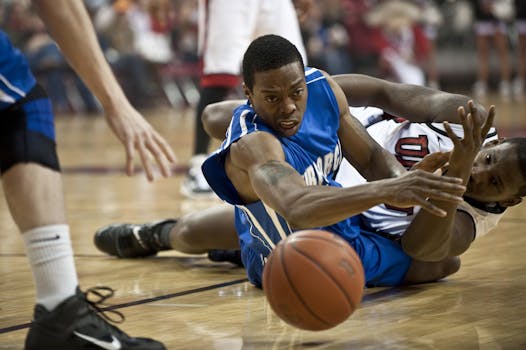
Free stock photo of sport, ball, game, match  Its that time of the year, when my school hosts a huge basketball tournament.  Usually both the boys and girls teams from eight different schools fly in or snow machine in to participate. 

The games started yesterday morning at 10:30 A.M., when our junior varsity team played against Bethel's junior varsity.  We lost by a significant margin but the girls played well.

About half my class is on either the girls or boys teams so they'd rather be in the stands watching others so they know the type of plays they will be up against while the other would just as soon skip class to watch the games.

With that in mind, I planned a week filled with basketball math so I could take them to the games and still continue to teach math.  I spend the first two days of the week teaching students to read box scores with field goals made out of field goals attempted, free throws made out of free throws attempted and 3 point field goals made out of attempts.  We worked on learning to read those scores so students could calculate the individual total scores and the teams final scores.

The next step was to have students calculate each players success from the list of scores.  The final step was to compare the players with the rates for professional players to get a better idea of how well the players in the exercise compare with professionals.  Most of my students really have no idea what a good success rate is nor do they know how to look at the over all picture.

This activity gave students a foundational knowledge of how basketball stats are calculated and how to compare the results to get an idea of who is a good player.  You probably wonder where I am going with this?  Since I take my students to the games, I give them an assignment to pick out a player and keep track of all the attempts made for one, two, and three points during the game.

Since each class is at a different time and the tournament is going have a winners and losers brackets, they will be observing different teams.  This I plan to have students analyze the players they chose, work with others to create their dream team based on these results. 

The final step in this will be to create a whole class discussion of all the results for two days of games so they can put together the dream team with suggestions from each group.  I am hoping this is a way to get students to see how the professional teams select potential players.

Let me know what you think.  Have a great day.