Thursday, June 7, 2018

Parabolic art, coordinate system and spirals.


At the end of the Kamehameha Technology conference a few of us discussed my presentation on incorporating art into the math classroom.

One of the people realized the foundation of the piece of parabolic art to the left is the x-y coordinate system. 

It would be so easy to write directions up using coordinates to describe the placement of the lines running from the x axis to the y axis.

Each line would have two coordinates associated with it, a beginning and an end.  In addition, all the coordinates would contain a zero for one of the coordinates since the lines begin and end on the axis.  Admittedly, students would need to use graph paper for it, either actual paper or digital paper.

This gives students the opportunity to practice their graphing skills, remembering how to read coordinates, and produce a piece of art.  If you would rather not use the x and y axis as the starting point, you could just as easily translate or move it 5 units left and 3 units down so the center is at (-5,-3) instead of (0.0).  This way you are introducing transformation into the design and practice.

In addition, it wouldn't be that hard to include the shrink and stretch so one axis is twice the length of the other.  This would mean you might use 1/2 inch distance on the stretched axis and 1/4 inch on the shrunk axis.  You could also have students rotate the figure to add another element of transformations to the activity.

So one activity can be used to have students practice using the coordinate plane and play with transformations to create art work.  These ideas came out of a short discussion among three math geeks who were thinking of ways to make the art as part of the actual lesson.

Another topic we discussed was starting incorporating a Pythagorean Spiral in a geometry class by having students use compasses to draw the perpendicular line to create the 90 degree angle. 

In addition, the leg of the next triangle can be found using a compass or protractor depending on the skill required.   Students can also calculate the hypotenuse for each triangle in the spiral. 

It would be possible to include a short lesson on the Nautalis and the mathematics involved in it.  It shows a connection between real life and mathematics which is something students really need.

Again the above ideas came after my presentation from other math teachers who are taking the basics and adjusting them to meet the needs of their class. 

Math teachers rock.

Let me know what you think, I'd love to hear.

Wednesday, June 6, 2018

Drones and Math

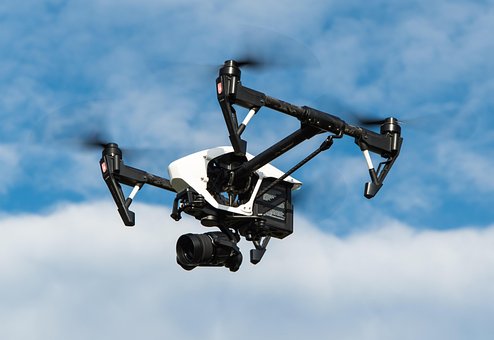
Drone Multicopter Dji Inspire Aerial View  I am in Hawaii to present at and attend the Kamehameha Schools Educational Technology conference.  One of the talks I attended was an introduction on drones.  During her introductory presentation, she discussed a few mathematical concepts and I wondered what other mathematics could be used with drones.

First she mentioned they had to use trig to figure out how to have the drone fly to the exact same place every hour so photographs could be snapped. 

The idea was to see the progression of smog as it settled down around the city.  Once the photos were taken, they were put together to create a longer piece, like a video so people had a better idea of smog movement.

In the class, she had students create a flight path mimicking a regular pentagon.  That involved a lot of discussion on the best way to accomplish it.  One student finished much earlier than the others so she had him create a circular path because she thought it was not possible.  He made a 360 sided polygon and used that for the circular path. 

I can't remember which mathematician used the idea that if you had a polygon of enough sides, you'd end up with a circle.  I know that many Alaska Natives use this technique to create patterns for circles.  To me this was a valid way to attack the problem and his final product did look like a circle.

Just these three topics came up in her short 50 minute presentation.  It seems to me that there is a lot more mathematics involved such as:

1. Addition, Subtraction, Multiplication, Division, and Circles.

2. The Pythagorean Theorem and Trigonometry.
 
3. Vectors.
 
4. Linear Algebra and Coordinate Transformations.
 
5. Differential Equations.
 
6. Fluid Flow and Airfoils.
 
7. Statistics.
 
So many different types of mathematics found in using drones.  This  is another way to make mathematics more real so they want to learn.  
 
Let me know what you think, I'll share more things I learn tomorrow and I'll return to this topic a bit later on.  Have a great day.

Tuesday, June 5, 2018

Pythagoras Caught The Murderer!

Nature, Forest, Sun, Moss, Rays, Green  Yesterday, I was finishing up something while watching something called Forensic Files on TV.  It caught my attention because they were trying to find enough evidence to convict a couple of people of murder. 

There was a photo of the man throwing the murdered victim off the cliff but the woman involved claimed she'd never been anywhere the murder.

The forensic scientists went back over the evidence and in one photo, they found a shadow of the photographer.  The guy stated they used Pythagorean Theorem to figure out the height of the photographer.  

Digital photography time stamps pictures so the police knew the date and time of the photograph. This gave them enough information to determine the location of the sun.  Then using information about the camera, they could determine the distance between the person in the photo and the location of the camera and the distance of the shadow length on the ground.

So once they learned all the distances they needed, they were able to apply the Pythagorean theorem to determine the photographer  was 5 foot 6 inches tall.  This was the female suspect's height.  So they arrested her, tried her and both she and the male were both convicted of murder.

Most times when you see this type of problem in textbooks, they have you find the height of a tree, a building, or a flagpole.  Honestly, most of my students do not care how tall the flagpole is, all the trees in town are no more than 4 feet tall, and we have very few buildings that are even two story. 

They consider this type of problem as just another boring problem they have to do.  This episode of Forensic Files, add a real life application of something most people study in class.  I admit, when I had to do those types of problems in school, I wondered why I needed to know the height of a building because it should have been in the plans filed with the city.  Flag poles tend to be a set height and why do I need to know it.  Even for trees, I couldn't figure out why I needed to know the height.  After all if a tree gets too tall, the city comes through to chop it down.

This is a situation I plan to use in the classroom to spark interest.  I may have to create a forensics unit with math to make the topic a bit more interesting.  Let me know what you think, I'd love to hear. 
Monday, June 4, 2018

(Rate)(Time) = Distance.

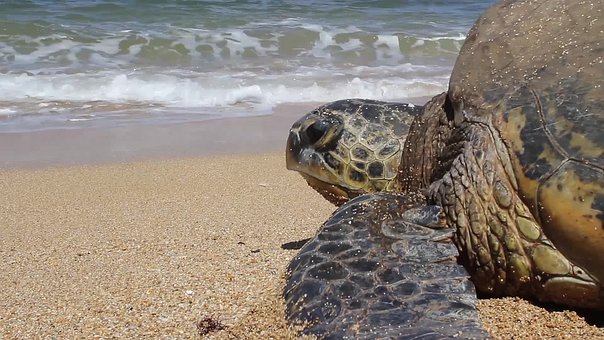
Turtle Hawaii Sea Ocean Reptile Animal Wil  It is hard to teach rate and distance problems to students who have no real reference to the situation.

My students get problems involving trains, buses, or cars.  The village has all of three pick-up trucks in the village but you are not going to get over 20 mph and you can't go past the dump or airport due to the lack of roads.

The closest buses are in Anchorage but Bethel might have one, I'm not sure.  On the other hand, the only train in the state runs from Anchorage up to Fairbanks and is mostly used by the tourist groups.  Its also so much more expensive than a plane trip.  My students are most familiar with snow machines also known as snow gos, or 4-wheelers which you know as ATV's and they know how long it takes to fly to Bethel or Hooper Bay. 

Even those boat questions where the person is able to go such a speed upstream and another speed returning don't work well where I am.  They use boats but the body of water running through the village is actually a slough which is influenced by ocean tides.  Everything around here is based on when high tide occurs because if you head out at the wrong time, you could end up not having enough water and possibly get stuck when the boat scrapes bottom.

I usually end up rewriting these types of problems to include local places using the same criteria as regular textbook problems but adjusted for my students.  This next year, I am going to look at using animal migration and normal travel speeds to create problems they relate to.

In other words, instead of talking about two trains starting in New York at the same time and going opposite directions, I start the snow goes at Chevak and send them opposite directions because most students regularly travel in the winter to Hooper Bay, Scammon Bay, St. Mary's, or other places within a four to six hour range.  Or I might ask about the Mallard Ducks on their trip south for the winter.

They understand this but when they look at the train problems, most barely know what a train looks like, let alone know how fast one might go and may not be able to locate New York on a map. Many never leave the village or if they do, they usually go to Bethel and possibly Anchorage.

Applying it to train and car problems come after, they've learned to work the problems based on their previous knowledge.  I want to create problems based on bird migration because they understand that birds leave in the fall and return in the spring.  They can tell you the order in which the birds leave, and return.  They may not be able to tell me where they go but they see the migration every year.

They also understand movement patterns for seals, walrus, moose, and whale since there is always excitement as hunters share the information for where they found each.  I've seen seals bob up and down in the water when traveling by boat. 

This is how I work on building a solid foundation for students in these types of problems.  Let me now what you think.  I'd love to hear your ideas on this.

Friday, June 1, 2018

Longhand versus Digital Notes

I read the recent Learning Scientist blog on taking longhand notes versus doing slide annotations and wondered whether longhand or digital is better for notes in general.

I know from earlier reading that writing or learning to write is the kinesthetic piece of learning to read.  The muscle activity helps students learn the letters and how the letters are put together to create words. 

When young children learn to type, it uses the muscles in a different manner and they often find it more difficult to learn to read.  Typing does not provide the same kinesthetic element that longhand does. 

There is research that when a student takes notes using longhand rather than digitally, they tend to score higher on tests.  One big problem with taking digital notes is the easy access to the internet during class.  Most educational facilities offer internet to students as part of the educational experience.  Unfortunately, students often chat with friends, send emails, or surf the web while taking notes so their attention is not fully on the lecture.

One reason for using the internet is based on the fact that typing is often faster than writing notes out by longhand and digital note takers often have to wait for the others to finish writing.  Unfortunately this "multitasking" means students are not focused on the material fully. Consequently, it slows down their ability to comprehend or retain the information.

It has been found that digital note taking decreases retention and recall while shortening a person's attention span.  Remember, yesterday I said a neuroscientist indicated that most people are only focused on a talk or lecture for 50 percent of the time?  This is one reason for a decreased attention span.

On the other hand, writing out notes is slower but it gives the brain time to absorb and store the information while providing the opportunity for deeper engagement.   In addition, research indicates that writing notes by hand uses kinesthetic activity to help the brain encode the information when learning. 

The motor skills involved in handwriting require a person to be more actively involved in learning because of the brain connections which are not found during the passive activity of typing.  The brain is more involved in the physical process of writing.  It uses a more complex thought process because you have to paraphrase the material rather than typing it verbatim. 

Furthermore, it is much easier to write out mathematical equations by hand then try to do the same thing on a laptop.  There are apps out there which allow you to hand write your notes but the app changes your writing into printed form.  I do not know if those allow you to do mathematical expressions or equations.

So this is one good argument for staying old school on notes.  I'm in transit to Hawaii where I'm presenting at the Kamehameha Schools Educational Technology Conference.  I plan to continue publishing every day.  If I learn something cool, I will share it. 

I hope to try out a couple of those convert handwriting to type apps and report back on how they work for math.  This type of app might allow students to take handwritten notes but leave them in a readable form.  My notes resemble chicken scratch so I appreciate that type of app.

Have a good weekend.  Have fun.