Sunday, December 20, 2020

Saturday, December 19, 2020
Warm-up

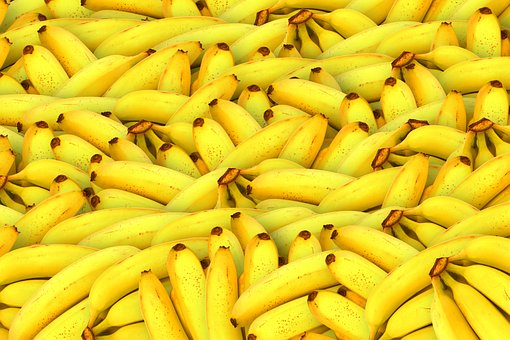
There are an average of 18 tiers of bananas and each tier has 16 bananas. How many bananas are there on this bunch? Now if each banana weighs 4.2 ounces, how many pounds is in the bunch?
Friday, December 18, 2020
Which Weighs More? A Pound Of Feathers Or A Pound Of Gold?

Most people don't realize that the two items are weighed using two different systems. Feathers are weighed using the "avoirdupois" system which uses 16 ounces per pound where as gold is weighed in the troy system which only has 12 ounces per pound.
Furthermore, the avoirdupois system is used to weigh things like food, people, mail, and equipment while gold, silver, and other precious metals are weighed with the troy system. So if both the feathers and gold are weighed in the troy system, something strange happens. The feathers weigh more than the gold. This happens because one avoirdupois ounce is equal to about 28.1 grams while one troy ounce is equal to 31.1 grams. So a 16 ounce pound of feathers weighs around 453 grams while the 12 ounce pound of gold weighs around 373 grams.
The whole troy system got it's start in the French town of Troyes and was based on pennyweights and grains of wheat or barley. Yes, grains of wheat but more on that later. First a troy ounce has an assigned equivalence of 20 pennyweights and a pennyweight was defined as the weight of a silver penny in England. Now back to grains. The grain of wheat or barley is the basis of both the weights in the troy and the avoirdupois systems.
If you look at the grains as the basis of both troy and avoirdupois systems, you'll find one carat is equal to 4 grains, a troy ounce is defined as 24 grains and a gram is 15.432 grains. Now the thing about the grain measurement is that the troy systems is said to have been based on barley grins while the wheat grain was used as the standard of weight. Apparently three barley grains equaled four wheat grains.
The question of "Which weighs more? A pound of feathers or a pound of gold opened up the possibility of having students learn more about avoirdupois and troy systems, their differences, and what they are used to weight. In addition, it opens the door to include some history into the math class and it also can lead the the question of "Is it fair to compare these two items in the way it was done?". Who knows you might get some interesting opinions from your students.
I hope you found this as interesting as I did. Let me know what you think, I'd love to hear. Have a great day and enjoy your weekend.
Wednesday, December 16, 2020
Ways To Have Students Participate Digitally.

It is important to do this because you have students who will always try to be the first one in with the answers and others who will never say a word but for students to learn, they have to participate.
Digital platforms also make it harder to carry out conversations because you can't "see" others who raise their hands, or who just unmuted to talk but the host can see it. In addition, not everyone has the ability to participate digitally so when we discuss participation, we have to talk about having everyone involved, not just those with access to Zoom or Google. Since most people have cell phones, it is possible for students who do not have good internet or a computer to call in via phone so they can still participate in synchronous learning.
Lets start with ways to get students involved virtually or via synchronous learning. One way is to provide the material to students ahead of time to read and answer associated questions. When the online meeting starts, students share their responses with each other while the teacher draws a picture or web showing the flow of the conversation. At the end of the conversation, the teacher shows students the web so they can analyze it and reflect upon who spoke, who listened, and who used ideas as a foundation to build upon.
Don't be afraid of using the chat feature in Google Meet or Zoom. One can ask a question, let the students put their answers in the chat box but not send them until the teacher says share. Teachers can also to check for understanding by having students provide a thumbs up or thumbs down. Chat boxes are also great for having students ask questions, provide answers, or even answer True or False questions and providing justification.
It is possible to do Think-Pair-Share digitally by providing prompts and having students divided into smaller rooms to discuss things and come up with answers they recorded in google documents on on google slides for accountability. When they returned to the group, volunteers from each group shared their conclusions. One can take this a slight different direction by assigning small groups of students a math problem to complete. Once they've gotten an answer, they share it with others using the information in the document or slide.
One can also combine asynchronous with synchronous learning by having students watch videos and completing online activities at home before coming to class digitally. Once in the virtual classroom, students can ask questions, split them into smaller groups for small group work, and clarify misunderstandings.
As for asynchronous learning, use the question feature in Google classroom to ask students questions and have them answer. In math, the question might be something like "In this problem would you distribute or divide first? Explain your answer." or it could be asking students to ask questions about what they didn't understand in the lesson.
One can also have students create a short video showing how to solve an assigned problem. The teacher would up load the videos to say google classroom so students can watch each one and they are required to post a question to two other videos.
It is good to know there are ways to increase student participation. Let me know what you think, I'd love to hear. have a great day.
Monday, December 14, 2020
Figuring Out What To Teach During The Pandemic.

Unfortunately, when I have to send packets out, I have to include detailed explanations to provide additional clarity for textbook explanations. In addition, I create videos that are posted in google classroom for students who have decent internet and are available on thumb drives for students with a home computer. Rather than having a complete online class, I have office hours via google, zoom, or phone so students can either attend digitally or call in via phone to ask questions. If they have e-mail, I will send answers via e-mail if they phoned or sent a question in.
I've taken two classes on teaching virtually, one was on math but both seemed to be geared more towards teaching via Zoom with the assumption, all students have access to great internet. Neither one really addressed the issue of creating packets that can be used by students to learn. Packets require students to be self motivated and willing to work. I'm not sure how to have students complete work if they normally struggle in the classroom.
I have students who struggle in person because they have gaps in their foundational knowledge. They need to ask questions. They need to make sure they are doing the work correctly. They need the reassurance they get in person. I don't know how to convey that via a packet. This is one huge reason I ask myself if they really need that topic now.
For Algebra I, I can cover the material when they see it in the Algebra II class while those in Algebra 2 should see it again when they take pre-calculus or go to college. I've come to the conclusion that if I can't cover it this year, they will have another opportunity to learn it. I do wonder if I'm being fair but I do think I'm being realistic about this.
I admit that for some topics, I'm stressing using graphing to answer rather than mathematical methods because it helps students learn to interpret graphs while understanding the connection between the written equation and it's visualization. I hear again and again that students need a visual to connect to the equations. Fortunately, the graph works for many things.
I also realize that no matter what we do this year, no matter what we cover, our students will be have gaps in their knowledge. Perhaps, more than normal. We try but we can only do what we can. Let me know what you think, I'd love to hear. Have a great day.
Sunday, December 13, 2020
Warm-up

You need enough feathers to cover eight more costumes. The first costume took 587 feathers while the second took 625. If one pound of feathers has about 283 feathers, how many pounds will you need to finish the costumes?
Saturday, December 12, 2020
Warm-up

You are in charge of providing masks for your school. Everyday, one 50 pack of masks is used by those who forgot theirs or do not have any. How many packs will you need for the next three months?
Subscribe to:
Posts (Atom)